The Boy Who Couldn't Swim (2011) "Drengen der ikke kunne svomme" (original title)
Director: Anders Helde
Writer: Anders Helde
Genre: Short movie
Country: Denmark
Language: Danish
Duration: 33 min
Year: 2011
Stars: Jonas Wandschneider, Sebastian Elkrog Sorensen, Christian Damsgaard
Rasmus arrives in Copenhagen determined to find his mother whom he has never met. Having just arrived at Copenhagen Central Station Rasmus is approached by Nicklas who wants Rasmus to help him by keeping a stolen IPod. Rasmus does so and to return the favor Nicklas offers to give Rasmus a ride to his mother’s house. Reluctantly Rasmus accepts the offer and that kicks off a day that holds lots of fun and reveals hidden feelings.
Two young actors have that faces that are were very expressive of their personal sense of unsureness and disconnectedness with the world, yet wishing to demonstrate a bravado and control of their personal circumstances. The opening shots of the film showed the yearning and glistening hope in the eyes of the boy, Rasmus, as he looked out the train window, contrasted with the harsh face of a middle-aged stranger sitting next to him on the train whose face showed the angry lines of a firm acceptance of his place in hard world where dreams won’t come true. One can see in that that youth is not apt to find much of value from people such as those, who are more apt to destroy their spirit than they are to ignite it.
In the train station, the other boy, Niklas, almost by a kind of bodily magnetism instantly connects with Rasmus as someone he can trust to help him by holding a stolen item while he escapes from men who are pursuing him. A while later, Niklas, having escaped from the pursuing men, meets up with Rasmus and while it seems that Rasmus has a vague destination he is heading for that he doesn’t feel like revealing to Niklas, Niklas convinces him that they need to go there together with Rasmus riding in the cart of Rasmus’s bicycle cart. And that really was the true journey, the two of them toward, or with, each other, they who share certain personal circumstances and need.
This action of them traveling together seemed to put them together in their own isolated bubble. Much of the movie was simply their traveling together throughout the city of Copenhagen from one destination to another (which I appreciated seeing, as while I have passed through Copenhagen, I haven’t seen very much of it), but the beauty of the city, the simple shared exuberance of the boys as they felt the wind in their hair and a feeling of their own motive power, and the various expressions on their faces, sometimes wide open, sometimes cautiously masked, tell the true story without a need for words. And what words there were, were pointed and expressive, and throughout those conversations the boys were continually reaching out in yearning for connection, and then drawing back into unsureness, wavering on that balance beam between “yes I need” and “no I don’t”.
The title of the movie, “The Boy Who Couldn’t Swim”, made me think of a wise Jewish saying that I learned about in a psychology book, “A father’s job is to teach his children how to swim.” While at first that seems trivial, you come to realize that “swimming” is metaphorical of leaving the safety of home and venturing out bit by bit into an alien and dangerous world (or an uncaring and exploitative one). The father is not to hang onto his children, but to help them grow up into a secure adulthood. So what of those children who have not been “taught how to swim?” How do they maneuver out in this world without having had a secure center to start out from? Perhaps they can have another chance, by finding helpers along the way, if only they can recognize them and take the risk of connecting with them when they find them.
Stars: Thure Lindhardt, David Dencik and Nicolas Bro
Bratstvo (Broderskab) drama je o potrazi za identitetom i nedopuštenoj vezi dvojce muškaraca koja se rađa u kontekstu neonacističke skupine .
Radnja Bratstva započinje kada Lars, neposredno prije promaknuća, napušta vojsku i vraća se roditeljskom domu. Uskoro se priključuje neonacističkoj skupini gdje brzo napreduje i upoznaje budućeg ljubavnika Jimmyja. Pod okriljem bratstva započinju intenzivnu ljubavnu i seksualnu vezu koja se uskoro pokaže opasnom i problematičnom. Taj ih odnos dovodi do emocionalnog i moralnog rastrojstva. Postavlja se pitanje što je lojalnost, a što izdaja, ali i što je zapravo ljubav u njihovu slučaju.
Da nije ovog neonacističkog konteksta možda bi i mogli da film posmatramo samo sa aspekta gay ljubavi. Ono što nam se nameće kroz ovu priču je jasno pitanje da li imamo pravo da tražimo veću toleranciju prema homoseksualzimu i da li smo mi sami dovoljno tolerantni prema drugim manjinskim grupama. Na primjer prema romima, crncima, strancima, ljudima druge vjere ili nacije.
Mnogi pederi nisu svjesni koliko tolerantniji od vćine u društvu moraju biti ukoliko žele da traže neka prava za sebe.
Imao sam priliku da saslušam čovjeka koji mi je nakon seksa jasno rekao: -Ja nisam peder i ne volim pedere. Mislim da je to bolest koju treba iskorjaniti. - Onako prilično iznenađen sam ga pitao: -Jesmo li i mi bolesni kada samo radili ovo maloprije?- Kaže on: -Mi nismo pederi, mi smo to uradili onako muški, drugarski. Pederi su oni što se šminkaju i idu na gej parade.-
Nisam mnogo polemisao sa tim čovjekom, ali njegova percepcija gej svjeta oko sebe je u suprotnosti sa onim što on ustvari jeste.
I rewatched Brokeback Mountain, a film I had in my top-100, for the first time last month. It is still a strong film but it dropped well out of my top-100. Watching Brotherhood, another film about a gay relationship in an unusual setting, and the burdens of the closet, did a lot to help me understand why. After a brief scene of a gang of neo-Nazis beating up on a gay guy, we cut to Lars (Thure Lindhardt, in a Filmspot nomination worthy performance) sitting in a military office where an officer is telling him he is being denied promotion because he was alleged to have made passes at some of subordinates. He is told it will go away if he quietly departs the Army.
While this hints at discrimination, our understanding that the story is probably true suggests that it wasn’t an unreasonable decision. However, it leaves Lars separated from his career path and feeling driven that much further into the closet, worsened when his parents, not knowing why he is leaving the Army keep nagging him about the decision. And so through an acquaintance he falls in with a group of neo-Nazis. This is the film’s first test. We have to believe that he’d stick with the group. It seems pretty clear that Lars is not particularly ideologically connected to the group and a moment a bit later in the film when he expresses a bit of surprise that the neo-Nazi group is homophobic is a bit too naive to be believed, but I did ultimately believe that his need for a group and direction, and perhaps the desire to do something totally not gay like be a neo-Nazi, had me believing. [spoiler]For the record, wrestling naked with other men in the ocean is good clean hetero fun and don’t let anybody tell you different.[/spoiler] While I don’t understand out gay people being members of clearly homophobic institutions like a neo-Nazi group or the Republican Party, the presence of closeted individuals makes perfect sense at this point. The subsequent relationship feels much more naturalistic than the one in Brokeback Mountain and the story as a whole is more tightly constructed and the fallout that much stronger as a result. The setting itself adds a great element as the rise of the far right movement in Europe, focused around anti-immigration but extending to all the other typical fascist ideals, is quite a real and present concern. Brotherhood was my dictation partly because it was the only one FCM initially offered that was out on DVD, but with other Nordic films with LGBT themes like CINECAST!ing Amal and Let The Right One In placed highly in my top-100, it seemed like a good bet. But my optimism didn’t prepare me for just how good it really was. Brotherhood sits in my top 10 for the year and will be on my filmspot ballot for Best Foreign and Best Debut Film in addition to the acting nomination. As this is the only year it will be eligible I really hope some other people take the time this month to check this out and thanks to FCM for dictating it to me. As an additional incentive, this is a great movie for those who appreciate elegant Danish bottoms.
Director: Carlos Augusto de Oliveira Writers: Morten Kirkskov, Carlos Augusto de Oliveira Genre: Shoer movie Country: Denmark Language: Danish ( with english subtitle) Year: 2006
Stars: Morten Kirkskov, Simon Munk and Stine Schroder Jensen
Jorgen sa svojom ženom svako ljeto poziva susjede da sa svojim sinom Tomasom uzivaju u ljetnoj noći uz večeru. Prvo ljeto Tomas i Jorgen stvaraju specifično prijateljstvo zasnovano na iskrenosti. Drugo ljeto prilično pijani Jorgen i Tomas imaju seks. Treće ljeto Tomas se suočava sa činjenicom da Jorgen ima svoj život i da san ljetne noći uvjek doživi jutro otrežnjenja.
Simpatična priča koja me je podsjetila na događaj prije dosta godina kada sam sa roditeljima išao na jednu svadbu u jednom hotelu blizu mora. Igrao sam i veselio se cjelu noć uz dosta pića da bih pred jutro izašao napolje da prošetam jer me je stigao umor. Naslonjen na jedan zid gledao sam u more onako bez veze, trudeći se da ne zaspem. Jedan stariji rođak mi je prišao i počeli smo neobavezujuću priču o svadbi i mladencima. Predložio mi je da odspavam malo u jednu od soba koju su bili zakupili uz salu u kojoj je bila svadba. Kada smo došli u sobu samo sam se bacio na krevet, a on mi je rekao da se skinem i počeo me svlačiti. Najnormalnije smo imali seks kao da smo to svakog dana radili. Ujutro kada sam se probudio njega nije bilo. Otišao je natrag u mjesto odakle je !
Each summer, Jorgen and his wife who live abroad go back to Denmark, their homeland. In each occasion, they meet long-time family friends Birgitte, Peter and their son Thomas, who has a cottage just nearby. Jorgen and Thomas have something in common, both walk around the beach before going to bed whilst the others are already fast asleep. When Jorgen confronts Thomas why he is feeling so sad, Thomas reveals a secret in exchange for Jorgen's one. Then they become closer together keeping each others' best kept secrets. But through the course of the next two summers their relationship develops in a way they would never have expected...
Although this is just a 30 minute short film, it definitely deserved a separate entry in my blog. 'Cute' was the first word when I was 5 minutes in the film and it ended the same way. In between it had its bittersweet moments but in my opinion a very well handled overall theme. The interactions and relationships between two individuals who are very different from each other in every which way be it age, likes, sexual orientation and how it ends.
The film is kind of 3 acts and shows the three summers over a span of 3 years. Jorgen lives abroad, but every summer he comes back to Denmark with his wife. He invites, as usual, his neighbours and their teenager son,Thomas, for dinner at his place. Only, this time there is a strange tension in the air between the adults. After dinner, Jorgen and Thomas go to the beach for a walk. They discover that both have secret problems, and the fact they cannot talk about them is creating great stress. They decide to share a secret each. Thomas tells he is gay and Jorgen says that he wants to divorce his wife. With this a new friendship begins. Its the second summer now and Jorgen, now divorced invites his neighbors again. Thomas stays back to hang out with Jorgen. They are generally chit-chatting and the night ends up in them having sex. Finally , the third summer comes. Jorgen has met a new girl and is very happy with her and is having a party with his friends. Thomas shows unannounced. Jorgen freaks out but all Thomas wants is a final kiss for the sake of keeping each other's secret. Initially hesitant, Jorgen finally complies and Thomas leaves him very peacefully and quietly.
How over the course of three summers, a friendship starts and how the relationship develops is shown in such a beautiful manner. The first time they both share a secret was such a nice, simple scene. It could have been from anyone's life when people much more comfortable sharing secrets with strangers. The intimate scene in the second summer was also handled with sensitivity but it was the finale which was superb. Some people might judge the fact that a middle age man is getting sexual with a teenage boy but you need to see the whole chemistry with an open mind. How Jorgen is scared, how Thomas is heart-broken but then finally they are both at peace by just a simple kiss. They both know they need to move on and they do.
Director: Christian Tafdrup Writers: Christian Tafdrup (idea), Christian Tafdrup
Genre: Short movie
Country: Denmark Year: 2008 Language: Danish
Duration: 39 min
Stars: Allan Hyde, Julie Grundtvig Wester and Lars Brygmann
Priča o 16-godišnjem momku koji se zaljubljuje u oca svoje djevojke.
Često se tinejdžeri zaljube u starije muškarce. I sam sam imao prva iskustva sa starijima od sebe , a i danas više volim starije muškarce. Valjda zato što smo i najzreliji iza 30-te godine i najmuževniji. Mladost ludost, to je nestabilno vrijeme, neozbiljno i poprilično napaljeno, pa se i ne razmišlja mnogo svojom glavom, već više kurcem.
Ova priča me podsjetila na jednog mladog momka koji me je danima pratio po gradu. Primjetio sam da se pojavljuje uvjek na ista mjesta gdje se i ja krećem. Jedan dan dok sam čitao novine u jednom kafiću kad se pojavio na vrata ja ga pozovem kod mene za sto da ga nešto pitam. Sav crven u licu je sjeo pored mene i ja ga prilično drsko pitam da li ima nešto da mi kaže, a da se ne usuđuje?
Počeo je nešto da muca i ja mu rekoh da je najbolje da naruči neko piće pa će mo nastaviti da pričamo. Uz pelinkovac i kafu sam ga ispitao ko je, odakle je itd.
Rekao sam mu da ga razumijem ali da bi za njega i za mene bilo bolje da se držimo svoga društva kako nam i priliči!
Od tada me više nije pratio!
24 September 2009 | by itsvivek4u (United States) – IMDB
This film was actually a short film (about 40-45 minutes) long but it was still beautiful to hold your attention and pass on a message. A sexual awakening of sorts for a young teenage boy.
16 year old Carsten has just started dating Melissa. He is introduced to her parents who have an instant liking for him and they welcome him very warmly in their house. There is a warmth and tension that Carsten finds in her father. On a weekend trip to their summer house, Carsten cant control and ends up kissing her father who returns the favour but quickly backs off. There is then a strange tension between them. Carsten is confused and visits Melissa's house when he knows only her father would be there at home. after initial awkwardness, he starts crying because he is truly confused as to what is wrong with him and he can't figure out. The father gives him his shoulder and empathizes with him and soon they are making out. They are disturbed by Melissa and the mother but no one sees anything. Unable to deal with lies anymore Carsten tells Melissa that he has been with a man and they break up. Carsten then wants to be with her father but he refuses since he has a family and everything. Ev though you can see how much he wants to and is attracted to and likes Carsten. This is a sort of awakening for Carsten who realizes that he might be gay and would never be able to get together with his first love.
Except for the length of this short, it was almost like a full length feature film. The direction was very sensitive and the way the closeness between the 2 actors was portrayed was again shown with great sensitivity without making fun or mockery of anyone. Its time directors made more sensitive films for the gay community and I've us something meaningful to watch rather than all that gay crap that is out there.
Plot:16-year-old Carsten just started dating Melissa. He is introduced to her sweet and likable parents, who kindly welcome their first son in law. On a weekend in their summerhouse it turns out that Carsten and Melissa's dad might have more in common than they first thought. Written by Nordisk Film A/S
Also known as:Awakening (International - English title), Jagten (Denmark - working title),
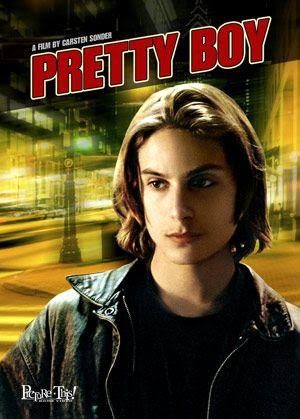
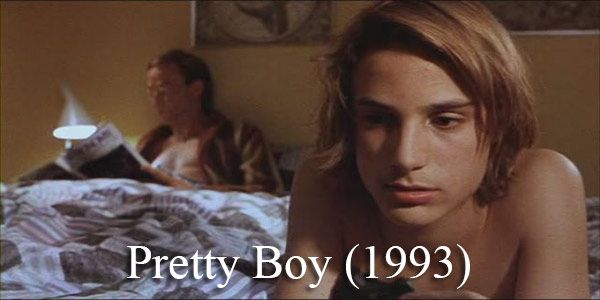
Director: Carsten Sonder Writer: Carsten Sonder Genre: Drama Country: Denmark Language: Danish ( with enlish subtitle) Duration: 86 min Year: 1993
Stars: Christian Tafdrup, Dicte, Rami Nathan Sverdlin
Author: WaxBellaAmours from The Great Northwest ( IMDB)
The Danish "Pretty Boy", being made available on DVD for the first time 12 years after it's original release, tells the story of another disillusioned modern teenage youth, this time a 13-year-old male hustler roaming the nocturnal streets of Copenhagen. Supposedly fleeing a dysfunctional home life and spending his nights hoping beds to find a place to stay, Nick (Christian Tadfurp) lives a transient and grimly solitary lifestyle as he tries to survive amidst the cold and unwelcoming world he's entered into.
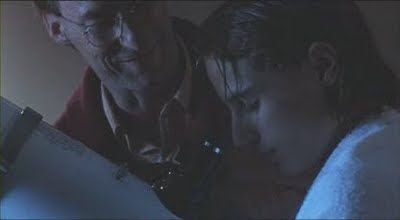
Clearly yearning for a father figure, Nick grows smitten with one of his middle-age suitors, the carefully closeted Ralph (Stig Hoffmeyer), an Astronomist who shares Nick's fascination with the stars. Ralph may be his possible savior, but when he tremulously kicks him out when his girlfriend returns, Nick soon views the cowardly Ralph with a heartbroken contempt.
With nowhere else to turn, he boards with pawn-shop/antiques store owner Hartvig (Bent Hasselmen) in exchange for help with the business (rather than the usual sexual favors), which Nick supremely fulfills.
However, this environment soon gets him involved with an organized gang of adolescent hoodlums and hustlers that frequent Harvig's shop. This nasty Oliver Twist-esquire group make their living by seducing idiosyncratic middle age males with a taste for young blood only to rob them later, taking revenge on the sleazy "solicitors" who won't pay up and selling other stolen items to Harvig. Having brushed with them previously at the sleazy train station where he frequently hangs out, Nick soon moves in with the surrogate brood, led by the ruthless Rene (Danish pop star Benedicte W. Madsen), where their nightly escapades give Nick a taste of the nasty, nihilistic rush he's previously only skimmed upon.
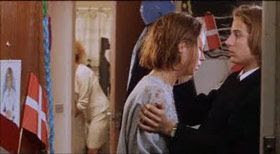
Things start to get complicated when he falls for Rene, an obvious female guised as a boy who leads a rather normal life "off-duty", a complicated romance that becomes more problematic when Nick's old world starts intruding in... And that's all of this bizarre plot that I really need to give away.
The fundamental problem with "Pretty Boy" is not so much it's occasional over-the-top grotesqurie, it's unavoidably creepy subject or an odd stylistic resemblance to "Diva", but rather it's complete lack of a grip on a "story" that becomes more complicated and rushed then it needs to be, only feeling like another poison-penned rendering of modern-day Copenhagen in a disjunct and very confused form.
To be sure, "Pretty Boy" certainly jolts you awake at the begging, with one remarkably brutal act of casual violence as we see a bespectacled, late-30-ish waif of a man in a train stop bathroom get a relentless, out-of-nowhere beat down by Rene's gang of teenage hoodlums in front of the oblivious Nick, and it's a definite, if somewhat repellent, grabber to start off the fittingly bleak tale.
The rest of "Pretty Boy", however, is perpetually marred by the filmmakers complete indecisiveness (or, to be more frank, inattention) to his character's inner qualities and outward plight (not only Nick's bewildering, shape-shifting sexual preferences), as well as seeming awfully confused where to take an already over-wrought script that's ultimately just a packed trip lacking a destination.

Obviously, a film that dares to mingle in a world of child prostitution and teenage crime is going into areas that even most of the gutsiest filmmakers would fearfully avoid, and perhaps it's only natural that director Carsten Sonder feels a little too burdened to be able to propel the story past those basic themes or give any perspective. It certainly garnered some immediate controversy (though more so for some reportedly graphic nude scenes of young star Tadfurp (who admittedly looks much older), edited from the DVD cut), but that doesn't help mask the film's lack of a central identity, despite copious stories to tell. What is it, a sordid and occasionally bizarre coming-of-age story, a scathing portrayal of callous youthful violence and hedonism or, especially in the last act, a plot-heavy operatic tragedy? In short, all and none at the same time.
Ultimately, the film lives and dies with the actors, and that's where it ultimately fails. It's not so much the performers fault; the movie never gives them room to breathe, rarely letting them rise above a remote, somewhat sour blandness.
Tadfurp makes a decent debut as the title character, an earnest if somewhat uninspiring performer, but the movie never really decides on his Nick: is he just a under-nurtured, well-meaning kid that naively gets swept into a life of perpetual debauchery and petty crime in search of a family, or another aloof burnout with some serious underlying pshycological issues? The movie seems to toss both traits on the table but neither even start to gel; serious parts of his life are left fragmented and hopelessly vague, most notably the mutual obsession with Ralph (whose courtship barely plays throughout the movie except to give the story it's expectedly melodramatic finale) as well as his supposedly terrible home life (which actually seems to be a rather stable single-parent home, despite his mother's blithe promiscuity. Clearly there's tension underneath that the movie barely explores.)
Although most of the other actors are given little to do (and their portrayals are pretty much geared only towards sufficiency and nothing more), the only other supposedly pivotal perf is Madsen as the gender-bending Rene, which the movie foolishly tries to pass off the conspicuously feminine star as a cross-dresser who people would actually believe as a boy. Nor do they ever explore if this "practice" is strictly business or a dominant psychological obsession, as it seems to stress nothing about Nick's bizarre sexuality. Although Madsen initially seems slickly confident in a role full of crackling, malevolent potential, Sonder eventually loses interest in her, as Rene becomes another bland plot catalyst by the time she strikes up a romance with Nick, haplessly lacking chemistry with him or the rest of this odd and fatally unfocused misfire.