Director: Travis Mathews Writer: Travis Mathews Genre: Drama, Erotic Country: USA Language: English Duration: 71 min Year: 2012
Stars: Jesse Metzger, Brontez Purnell, Ben Jasper, Keith McDonald, Jorge Rodolfo
Holivudski glumac Džejms Franko kritikovao je Australiju, jer je zabranila prikazivanje američkog filma sa gej temom ''I Want Your Love'', nazivajući takvu odluku sramotnom. Australijski odbor za selekciju filmova smatra da su scene seksa u filmu previše eksplicitne i nije dozvolio da bude prikazan na predstojećim Filmskim kvir festivalima u Melburnu i Brizbejnu, prenele su agencije. Franko, koji je najpoznatiji po ulogama u trilogiji ''Spajdermen'' i ''Planeta majmuna:početak'' rekao je da odrasli treba da sami odaberu šta će da gledaju. - Ne znam zašto je danas, u ovo vreme, film koji govori o ljudskosti zbranjen. To je sramotno i nadam se da će odbor promeniti odluku - rekao je glumac. Sporni film govori o mladiću koji je homoseksualac u San Francisku, a režirao ga je Trevis Metjuz.
Iskreno pogledao sam ovaj film i mislim se ne radi o pornografskom filmu bez obzira na eksplicitne nesimulirane scene seksa. Da li je prikaz uvlačenja kurca u nečije dupe ili usta neophodan kako bi nam prikazali emotivno stanje i karakter glavnog lika u filmu? U ovom filmu se za takav potez može naći opravdanje jer prikazuje nam različite strane ličnosti tokom seksa i nakon seksa. Definitivno nam tokom seksa instikti i nagoni preovlađuju u odnosu na razum. Uostalom ko još može razmiščljati o svrsishodnosti sopstvenih postupaka dok mu je nečija kita u ustima ili dupetu?
The début narrative feature film by Travis Mathews has received considerable attention in Australia for the wrong reason. Scheduled for Australian festival screenings in February, March and April, I Want Your Love has been refused the film festival exemption that it requires to be publically screened as a non-classified film within Australia. This exemption has been refused by the Australian Classification Board on the grounds that were the film to be formally classified it would be given an X18+ rating due to it containing explicit sex scenes without a narrative context. This is effectively stating that the film is closer in tone to pornography than narrative cinema, and it is therefore banned from being screened in most Australian states, including at film festivals to discerning adult audiences. What is most unfortunate about this decision is that not only is the graphic sex in I Want Your Love crucial to conveying character information and therefore part of the narrative, but the film is overall an excellent work by a talented emerging filmmaker.
I Want Your Love should be receiving attention for announcing the arrival of Mathews as a new voice in realist cinema. Coming from a documentary background, Mathews delivers a fly-on-the-wall look at the lives of a handful of gay men living in San Francisco over one weekend. At the centre of the narrative is Jesse (Jesse Metzger), a performance artist in his early thirties who is moving back to the family home in Ohio. He is holding a going-away party in the apartment he shares with close friend Wayne (Wayne Bumb), who is unsure about whether it was a good idea to have his boyfriend Ferrin (Ferrin Solano) move in. While putting on a brave and optimist face for his friends, Jesse confides his doubts and concerns to his neighbour Keith (Keith McDonald), an older man who is also an artists and serves as something of a mentor and father figure to Jesse. One of Jesse’s biggest concerns is moving away from his ex-boyfriend Ben (Ben Jasper). Similarly to Andrew Haigh’s outstanding Weekend, I Want Your Love uses its focused time period and small cast to express and explore some of the aspects of modern gay identity without attempting to be a definitive work. It is an unapologetic film that doesn’t attempt to dilute or ‘introduce’ the viewer to a segment of society that is not usually depicted in cinema beyond stereotypical or tokenistic inclusions.
With tight framing and a small ensemble of actors with the same name as the characters they play, this is an intimate work that attempts to express interior thoughts and emotions. From a distance the characters are all confident and expressive, freely discussing their feelings and desires. On this level alone I Want Your Love is an enjoyable 70 minutes in the company of a likeable group of people, but the film really shines when it shows us what is happening beneath the surface. Often actors are filmed in close-up to capture the small gestures and expressions that undermine what they are saying. Under the surface emerges a picture of people at various crossroads in life who are no longer sure about what they are doing, who they are with and even who they are. In this sense Mathews’s film is thematically universal and part of a long tradition of actor driven character pieces that incorporate a documentary aesthetic.
Where I Want Your Love pushes boundaries is the way it uses unsimulated sex to further express the status of the relationships and state-of-mind of the characters. Michael Winterbottom did something very similar in the 2004 drama 9 Songs, where the actors having sex on camera was used to communicate the evolution of their affair. I Want Your Love is perhaps even more successful in appropriating actual sex away from pornography and into narrative cinema since there is a better sense of the non-sexual scenes flowing on into the sex scenes. The transitions are far more seamless and draw less attention to the fact that the audience is watching unsimulated sex. It’s a bold innovation that non-pornographic films have experimented with since the late 1960s, more frequently in the past fifteen years. While cinema has never shied aware from exploring sexuality, even during periods of intense censorship, there is a rawness and honesty to depicting real acts of sex that opens up new ways of understanding the role sex plays in the everyday life. Without coyness, sensation or titillation, unsimulated sex is a refreshing way of exploring love and desire in a way that previous approaches to sex on film have not been able to achieve.
While there is a campaign for the Australian Classification Board to overturn the refused exemption status for I Want Your Love to allow for festival screenings, Australian audiences can still legally view the film via the film’s official website. It would be a shame if this impressive film did not receive the audience it deserves, especially considering how rare actual sex-positive films are. The irony of the situation is that far less graphic films that nevertheless perpetuate reductive sexual stereotyping and objectifying are commonplace and widely available. Films like I Want Your Love that explore aspects of sexuality and human connectivity with such affection and lack of judgement, are a rare gift that should be celebrated and not shunned.
Director: Grant Scicluna
Writer: Grant Scicluna (screenplay)
Genre: Short movie
Country: Australia
Language: English
Duration: 15 min
Year: 2012
Stars: Reef Ireland, Luke Mullins, Frank Sweet, Shannon Glowacki, Richard Anastasios
Priča iz zatvora za maloljetne osobe u kome je Malkom suočen da bira između uvjetnog otpusta ili da zaštiti druga u kojeg je zaljubljen. Kako se bliži vrijeme otpusta svađe u zatvoru eskaliraju sve češće, a vrhunac svega je kada grupa zavidnih nasilnika počne da maltretira Tya, sa kojim je Malkom u ljubavnoj vezi. Da li nijemo posmatrati kako ti maltretiraju nekoga koga voliš ili ga zaštiti po cijeni onoga što svaki zatvorenik naviše priželjkuje - slobodu?!
Odlično napravljena kratka priča u kojoj je izbjegnut svaki stereotip o feminiziranim uplašenim pederima, nesposobnim da opstanu i brane se u mačističkom društvu.
A story of sacrifice for love, The Wilding follows Malcolm, a hardened borstal inmate, who’s in love with his cellmate Tye. As Malcolm faces an opportunity for parole, a feud with other inmates escalates, with Tye being targeted as Malcolm’s weak spot. Malcolm is forced to choose between his own freedom and protecting the one he loves. Most short films are mini-movies in themselves. They often suffer having been crammed into such a short space. It is very difficult for filmmakers to convey enough in 15 minutes: something usually falls short, be it narrative or character development. The Wilding, on the other hand, is a brief glimpse into a story which has been running before you arrived, and will continue long after you have left. It is a window into somebody’s very existence: the narrative is his life, and these are just a few events that occur within. A fleeting glimpse, like crossing a river, you experience just a small part of the waterway, but are acutely aware of its full might. This is raw Australian filmmaking at its best. Combining the visceral brutality of Romper Stomper and the gritty terror of Chopper, The Wilding holds its own against films of this caliber, while still shocking those numb to their effects. The fly-on-the-wall camera style, while very rarely distracting, serves to heighten the realism and tension as you become part of the story. In an instant you are there. It is no longer a film, they are no longer actors. You are in the borstal, present at each event, every fight, every suspense. It is electric and it is terrifying. It is refreshing to see a gruff fighter as a confident gay man. There are no camp stereotypes here, no mincing and no effeminate voices. Malcolm is a brute, a ruffian. His moments of tenderness are subtly detectable under a coarse exterior. The acting is mesmerising. Even the corrupt and manipulative warden has enough of the cliches to satisfy the audience’s need for familiarity, but Scicluna still turns the stereotype on its head. While his methods and means are questionable, his motives are clear: the warden has Malcolm’s best interests at heart. With enough breathing space in each scene for you to imagine what is going through the minds of the characters during each event, the action is still a hostile assault on the senses. Your skin will ripple with goosebumps as Malcolm’s determinedly satisfied stare cuts through the warden, time slowing to a grinding halt leaving the question: ‘Why?’ Love. That’s why. Overall Opinion: Given the brevity of the film, its ability to invoke shivers and spark adrenaline surges is incredible. Your eyes will be wide, pupils dilated, too transfixed to look away; too involved to even blink. The unsteady camera serves to heighten the realism, fueling the rush as you are transported there, and put into danger. The tribal portrayals are brutal, the romance as delicate as it can be in such a setting. How can a love story be so horrifyingly chilling and heart-warming at the same time? This is a gripping masterpiece. Writer: Adrian Naik


 I Want Your Love (2012)
 Holivudski glumac Džejms Franko kritikovao je Australiju, jer je zabranila prikazivanje američkog filma sa gej temom ''I Want Your Love'', nazivajući takvu odluku sramotnom.
 The début narrative feature film by Travis Mathews has received considerable attention in Australia for the wrong reason. Scheduled for Australian festival screenings in February, March and April, I Want Your Love has been refused the film festival exemption that it requires to be publically screened as a non-classified film within Australia. This exemption has been refused by the Australian Classification Board on the grounds that were the film to be formally classified it would be given an X18+ rating due to it containing explicit sex scenes without a narrative context. This is effectively stating that the film is closer in tone to pornography than narrative cinema, and it is therefore banned from being screened in most Australian states, including at film festivals to discerning adult audiences. What is most unfortunate about this decision is that not only is the graphic sex in I Want Your Love crucial to conveying character information and therefore part of the narrative, but the film is overall an excellent work by a talented emerging filmmaker.
 With tight framing and a small ensemble of actors with the same name as the characters they play, this is an intimate work that attempts to express interior thoughts and emotions. From a distance the characters are all confident and expressive, freely discussing their feelings and desires. On this level alone I Want Your Love is an enjoyable 70 minutes in the company of a likeable group of people, but the film really shines when it shows us what is happening beneath the surface. Often actors are filmed in close-up to capture the small gestures and expressions that undermine what they are saying. Under the surface emerges a picture of people at various crossroads in life who are no longer sure about what they are doing, who they are with and even who they are. In this sense Mathews’s film is thematically universal and part of a long tradition of actor driven character pieces that incorporate a documentary aesthetic.
 actual sex away from pornography and into narrative cinema since there is a better sense of the non-sexual scenes flowing on into the sex scenes. The transitions are far more seamless and draw less attention to the fact that the audience is watching unsimulated sex. It’s a bold innovation that non-pornographic films have experimented with since the late 1960s, more frequently in the past fifteen years. While cinema has never shied aware from exploring sexuality, even during periods of intense censorship, there is a rawness and honesty to depicting real acts of sex that opens up new ways of understanding the role sex plays in the everyday life. Without coyness, sensation or titillation, unsimulated sex is a refreshing way of exploring love and desire in a way that previous approaches to sex on film have not been able to achieve.
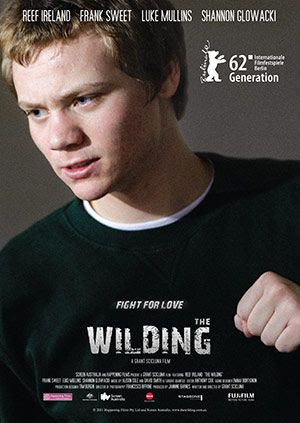

 A story of sacrifice for love, The Wilding follows Malcolm, a hardened borstal inmate, who’s in love with his cellmate Tye. As Malcolm faces an opportunity for parole, a feud with other inmates escalates, with Tye being targeted as Malcolm’s weak spot. Malcolm is forced to choose between his own freedom and protecting the one he loves.