Showing posts with label gay rights. Show all posts

24 November 2012

What makes a gay soldier different from a straight soldier?

gsoldier

Iako je ovaj spot objavljen u USA na dan vetrana namjenjen u svrhu promovisanja jednakosti STR8 i GAY vojnika i zahtjeva za slobodu sklapanja gay brakova, u našim balkanskim okolnostima nosi poruku “Svi smo mi dio istog tima” ili “U čemu je razlika?”
Stereotipi o ljudima homoseksualne i biseksualne seksualne orjentacije u Crnoj Gori i šire na balkanu teško umiru, najviše zahvaljujući uticaju crkve ali i samih gay ljudi.
Izraz “Ponaša se kao peder” nije nastao zbog seksualne orjentacije već zbog ponašanja koje nema veze sa tim.  Nesretna pederska potreba da laže nastaje od onog momenta kada kao tinejdžer shvati da je drugačiji od ostalih i vremenom se pretvara u jedan poseban način življenja u kojem ni sami gejevi nisu u stanju da razlikuju laž od istine. Često im to bude i največi problem u komunikaciji i socijalizaciji sa ostalim ljudima. Vrhunska pederčina ne laže samo sebe, već i kompletnu svoju okolinu bez obzira da li je u društvu gay ili str8 ljudi.
Ne tako rijetko će te u razgovorima sa takvim likovima čuti razne detalje o tome ko je gay , a ko nije, ko sa kime spava, sa kim su bili sve u krevetu i šta su sve radili. Takvi ljudi definitivno podržavaju stereotip o pederima kao brbljivcima i lažljivcima. Feminiziranost kao sastavni dio ovakvog aranžmana može , ali i ne mora da stoji.
Srećom takvi pederi su u manjini iako su najglasniji. Većina se ponaša normalno kao i svaki drugi čovjek sa istom problemima i mukama koje muče svakog čovjeka bez obzira sa kim spavao, bez obzira da li je autovan ili ne.
Zato zapamtite: Pederom vas ne čini to što radite u 4 zida, već to što radite izvan njih!

IS THIS SHIRTLESS VETERAN’S DAY AD DISRESPECTFUL TO GAY SOLDIERS?

BY: DANIEL VILLARREAL ( Gay.Net)

To comemorate Veterans Day — the day we thank American soldiers for their service — the LGBT marriage organization Freedom To Marry made a video of two hunky soldiers stripping down to their skivvies and showing us their scars.

The tagline reads: “Gay and straight service members scar in the same way.”

LGBT blogger Bil Browning hated the video:

“It always boils down to complaining about marriage, doesn’t it? God forbid we just honor LGBT soldiers for their service and sacrifice – instead of showing off their scars and bruises for political gain.”

“This video plays into every damn stereotype of our community. It objectifies the two men as sexual objects and takes a very serious subject – wounded veterans – and turns it into another way to insert marriage rights where it has no business.”

“Giving the soliders the right to marry their partners won’t let them escape war unscathed. To imply that it will is simply disgusting.”

While we don’t see the nakedness in the commercial as tawdry as Mr. Browning did, otherwise, he kind of has a point.

Despite the 2011 repeal of the gay-military banned known as “Don’t Ask Tell, “the so-called Defense of Marriage Act continues to screw over military families.

However, as the The Servicemembers Legal Defense Network explains, DOMA is just a nasty little cherry atop a crappy cake of military inequality.

For example, transgender soldiers still can’t serve, can’t recieve hormonal treatment for a gender-reassignment surgery and they can still get discharged as having a psychosexual condition if they express any feelings of gender disphoria.

Federal Drug Administration (FDA) guidelines still prohibit military servicemen who have sex with other men from giving blood, presumably because our blood is un-American or some sort of national security risk.

Furthermore, Article 125 of the Uniform Code of Military Justice rtill prohibits consensual sodomy (that is anal and oral sex between any two people, straight or gay. We’ll give you one guess as to which sexual orientation has been most negatively affected by sodomy charges.

Despite the fact that the 2003 Supreme Court case Lawrence v. Texas struck down sodomy laws nationwide, “the military could constitutionally continue to prosecute consensual sodomy under limited circumstances.” For example, if you outrank the guy you’re fucking… that’s a crime (see United States v. Marcum).

And that crime can snag you five years in prison, punitive discharge, reduction in pay and fines and forfeitures.

LGB soldiers can also get in serious trouble for “virtually any physical act with another person… if it can be shown that the act was committed for a sexual or romantic purpose,” under articles 133 and 134 of the UCMJ (also known as “conduct unbecoming” and “general article”).

So while DOMA may continue to harm our celebrated LGBT soldiers, it’s important not to forget about the other systemic inequalities that our servicemembers face on a daily basis.

18 October 2011

La otra familia (2011) –The Other Family

1347_MX01

La otra familia (2011)

Director: Gustavo Loza
Scenario: Gustavo Loza
Genre: Drama
Country: Mexico
Year: 2011
Duration: 100 min
Rating:

Actors: Jorge Salinas, Luis R. Guzman, Ana Serradilla, Bruno Loza, Carmen Salinas, Ana Soler, Nailea Norvind, Juan Rios Cantu, Dominika Paleta, Luis Gerardo Mendez, Andres Almeida, Silverio Palacios, Mario Zaragoza, Alejandro Calva, Alex Bakalarz


la_otra_familiaNekada smo svi za južno američke zemlje uključujući Meksiko mislili da su tradicionalno katoličke, konzervative i pomalo isključive. Još ako tome dodamo brojne vojne hunte, diktature i velike ekonomske i političke krize koje su bile sinoim za južnoameričke države onda nismo mogli ni sanjati da je u takvim zemljama tolerancija prema gay ljudima na nekom pristojnom nivou.

Tako je možda bilo nekada. A danas? Danas je u većini tih država dozvoljen istospolni brak, države finansiraju projekte koje doprinose toleranciji i upoznavanju stanovništva o pojmovima kao što su seksualna orijentacija i odnos društva prema tome. Većina ljudi u tim zemljama je prihvatila LGBT populaciju kao sastavni dio društva! Televizije, novine i ostali mediji promovišu sve projekte koje su u službi borbe protiv homofobije!

foto1- la otra familiaKao rezultat takvog intezivnog rada prestalo se i razmišljati o nekoj posebnoj LGBT kulturi, već je taj pojam samo dio jedne opšte kulture u državi.
Nastali su mnogi kratki filmovi, propagandne poruke, dugometražni filmovi, edukativne televizijske emisije, izložbe, muzika ...
Danas su te zemlje u potpunosti dio razvijenog svjeta, civilizacijski napredne, a koliko mogu uočiti i ekonomski jake! Posebno tu ubrajam Brazil, Argentinu i Meksiko.

La otra familija je Meksički film koji se bavi temom usvajanja dijece u istospolnim brakovima. Ovo je kod nas još uvjek blasfemična primisao jer se homoseksualci, tj pederi smatraju bolesnicima koji se trpaju u bulju , a neki misle i da je to zarazno, tako da je jedan od glavnih argumenata zašto treba ograničiti prava pedera upravo vaspitanje dijece. Religija tu ima takođe velikog uticaja.

Mnoga dijeca odrastu uz očeve pijanice, nemarne majke, narkomane, uz kriminalne ličnosti ili pak u nekom okruženju  koje odlikuje potpuno pomankanje ljubavi, nježnosti i pažnje. Siromaštvo je posebna priča koja može imati i sretan kraj kada je porodica složna i harmonična.
Da li je za takvu dijecu bolje da rastu u nekom sirotištu ili kod gay parova koji su spremni da tom djetetu pruže i ljubav, i podršku u životu!
Ovaj film razbija te dileme. Pun emocija sa lijepom pričom koja nas na momente raznježuje , pa raduje ili rastužuje do plača!
Sa moje strane ima sve preporuke za pogledati!

otra-familia-3

Prije 5-6 godina bio sam u vezi sa jednim starijim crnogorcem , koji je odrastao u patrijahalnoj porodici. Iskren, pošten čovjek, pun onih vrlina o kojima je pričao Marko Miljanov u svojim pričama o crnogorcima nekad. Kada smo se upoznali bio je već 6 godina u vezi sa jednom ženom koja ga je iskreno voljela i još uvjek ga voli!
Mene je doživljavao kao nekog svog najrođenijeg, i volio me je svim srcem. Upoznao me je sa roditeljima, bratom, sestrom, tom ženom i svima se hvalio da sam mu najbolji prijatelj. Naravno niko nije znao šta smo radili u 4 zida i to u našem slučaju nije bilo ni bitno. Idila je trajala oko 2 godine. Jednom prilikom sam pričao sa njegovom sadašnjom ženom koja mi je rekla: Ne mora on mene nikada oženiti , ali želim da mu podarim radost da ima svoje dijete. Znam da će ga voljeti svim srcem i biti dobar otac.
Nisam to lako podnio ali sam u tom trenutku bio svjestan da moram da se sklonim iz njegovog života po svaku cjenu kako bi mogao da ima ono što mu ja nikada ne mogu dati! Danas ima sina koji mu je sve u životu , sretan je! Ja nisam u kontaktu sa njim!

The other family

la_otra_familia_pianoTHE OTHER FAMILY is the story of Hendrix (Bruno Loza), a 7-year-orld child that’s been abandoned by his crack-addict mother Nina (Nailea Norvind). Ivana (Ana Serradilla), her best friend rescues Bruno,
however, she can’t take care of him because of an ongoing trip to Houston with her life partner (Ana Soler), to analyze the possibility of having an in vitro fertilization. Jean Paul (Jorge Salinas) and Chema (Luis Roberto Guzmán), an adult, stable, gay couple, and friends of Ivana, were given the task of taking
care of Hendriz while his mother spends some time in rehab. Patrick (Andrés Almeida), Nina’s lover and dealer is bien chased by Caimán (Mario Zaragoza), a drug warlord, because of a huge debt. In an
la-otra-familia1attempt to get the money he tries to sell Hendrix to a young, straight couple (Dominika Paleta y Juan Rios) who just lost a baby. While Nina tries to escape rehab in search of her son, Hendrix slowly
adapts to his new lik with Jean Paul and Chema. Patrick’s running out of time and urges Nina to find her misplaced son.

What’s best for Hendrix? Return to his crack-addict? Live with a homosexual couple that will offer him a better life quality? To be sold in an illegal fashion to a straight couple? or Surrender to the authorities and be sent to an foster house?


26 September 2011 | by jotix100 (New York)

vlcsnap2011081015h14m06Jean Paul and Chema are a gay couple that has been together for ten years. One can see their relationship is solid, proved to be real, as they decide to get married. In a macho dominated society the union between two men is a rarity that came to be legal only recently. It is clear these two men are in love and have decided to make a commitment that speaks loudly than words.
When Nina, a drug addict is sent to prison, her young son, Hendrix, is left to fend for himself. A friend, Ivana, a lesbian in a serious relationship with Gloria, decides to bring the boy to her friends Jean Paul and Chema. The men, uneasy at first, take a liking to the little boy whose innocence captures their hearts. After the initial misgivings, the couple end up loving Hendrix. Unfortunately, Nina wants her son back. Because of her connection with unsavory characters, the plight of the boy takes center stage for criminals that want to sell the boy to a wealthy couple. Jean Paul, and especially Chema, will fight to stand by the boy.
otra-familia-1Directed by Gustavo Loza with sure hand, this Mexican entry surprises because of the way the subject matter is treated with honesty in dealing with the issue. Mr. Loza, who also wrote the screenplay, presents us with a drama that in other hands might have degenerated into a sensational account of the two gay couples that are being examined. That, and the fate of the boy, with an uncertain future, is examined with a clarity that speaks volumes as to the intentions of the creator of the film.
There are solid appearances by Jorge Salinas and Luis Guzman as Jean Paul and Chema. The actors do a solid job in the way they approached their roles to make them real. Young Bruno Loza, whom one suspects is the son of the director, is perfectly sweet, in a surprising performance. Ana Serradilla, Ana Soler, Nailea Norvind and the great Carmen Salinas contribute to the over all excellence of the film.

11 November 2009

Priest (1994)

Priest (1994)

Director: Antonia Bird
Scenario: Jimmy McGovern
Genre: Drama
Country: UK
Year: 1994
Duration: 98 min | Argentina:98 min
Rating: 7.1/10


Actors: Linus Roache, Tom Wilkinson, Robert Carlyle, Cathy Tyson, Lesley Sharp, Robert Pugh, James Ellis, Christine Tremarco, Paul Barber, Rio Fanning, Jim R. Coleman, Bill Dean, Gilly Coman, Fred Pearson, Jimmy Gallagher


Description:


Volim ga, želim da je stalno pored mene, je li to grijeh?
Ako ste sveštenik onda je zasigurno taj grijeh još veći!


Biti gay, a biti svešenik za crkvu definitivno nije nešto što bi trebalo biti u božjoj milosti.
U božjem oprostu ima mjesta za svaki grijeh, a svako iskupljenje ima svoju cijenu. To zna svaki hrišćanin i to nije diskutabilno sa stanovišta vjere.
Diskutabilno je da li je ljubav između dva muškarca grijeh? Ima li crkva pravo da pogriješi i može li priznati grešku staru hiljadu i više godina?
Ako je bog učinio da ljubav bude pokretač čovjeka i najjača snaga čovječanstva, da li je onda svaka ljubav vrijedna poštovanja? Ako je iskrena i čista ma kojem obliku bila ispoljena, ljubav je nešto što može biti samo dar od Boga.
Sdruge strane crkveni fanatici ljubav između dva muškaraca pripisuje sotoni, zaboravljajući da Sotona nije u stanju da podari bilo kakvu ljubav, već samo mržnju, bijes i jad.
Greg Pilkington je katolički sveštenik koji dolazi u parohiju da zajedno sa Ocem Matthewem okuplja ljude u vijeri i propovjeda ljubav prema bogu i crkvi. Zatiče Oca Matthewa sa ženom i ošto ga prekorijeva što je prekršio zavijet celibata. Međutim Greg i pored toga ostaje tolerantan prema Matthewu i njegovo sagrešenje oprašta.
Ono što Grega dovodi u istinsko iskušenje je ispovijed djevojčice Lise koja mu otkriva da je njen otac seksualno zlostavlja. Ispovijed je nešto što prema crkvenim zakonima mora ostati tajna, pa ma kako teška bila. Greg koji se lomi da prekrši zavijet ćutanja uz nebrojene molitve bogu da spasi malu Lisu patnje i sam podliježe neoprostivom grijehu! Skidajući svešteničku odoru odlazi u gay barove i u jednom od njih upoznaje protestanta u kojeg se iskreno zaljubi.
Za tvrdokorne katoličke crkvene pristaše ovo je dovoljno da cijela filmska priča sagori na lomači.
Međutim realan život nam nudi opciju da prosudimo šta je u svemu tome istinski grijeh, a šta ne! Voljeti muškarca to zacijelo nije, a ne učiniti ništa da se prekinu patnje male Lise u srcima većine ljudi ipak jeste!
Dileme, osijećaj bespomoćnosti, griža savijesti i nedozvoljena ljubav prema muškarcu su emocije koje će nas pratiti kroz cjeli film i nametnuti nam da preispitamo sami sebe i pomjerimo granice između dobra i zla ali i grijeha i blagoslovljenog življenja!
Film me je na trenutak vratio u vrijeme kad sam se zadnji put vidio sa voljenom osobom. Ovaj poslijednji balkanski rat je uspio da nas razdvoji i nametne nam sopstvena pravila. Iako sam ja pravoslavac , a on katolik , sjedeli smo u istoj crkvenoj klupi i molili se da naša ljubav pobijedi sve strahote i iskušenja oko nas!
Nakon što smo sa suzama u očima izašli iz crkve, uputili smo se na autobusku stanicu gdje su nas čekali autobusi koji su nas zauvijek razdvojili! Iz tog iskustva sam naučio da je ljubav jedini razlog zbog kojeg se treba odricati i boriti. Voljeti nekoga je najsvetije i najljepše u našim životima!


PETER STACK, Chronicle Staff Critic


Because film by its very nature is steeped in images of the real world and oriented in action, it has trouble capturing a sense of the spiritual. But it is precisely that elusive sense, emerging from the mire of sin and guilt, that makes ``Priest'' an exceptional movie.


There has been a smattering of complaint about ``Priest,'' opening today at the Bridge in San Francisco (it's due later at other Bay Area theaters) from conservative Roman Catholics. The complaint seems misplaced. This powerful drama looks at the tortured soul of a gay priest and comes up with a curiously inspiring statement about faith and morality.
``Priest,'' from Britain's Antonia Bird (``Safe''), won the Audience Prize at this year's Toronto International Film Festival. Set in inner-city Liverpool, it stars the hot young British actor Linus Roache as the Rev. Greg Pilkington, a dutiful, idealistic diocesan priest assigned to a tough parish to replace an older clergyman who has lost his marbles because of the pressures of working in grim, poor neighborhoods.


PARISH PASTOR
Full of a desire to do right in his new job, Father Greg hits a snag almost the minute he arrives. He discovers that the gregarious parish pastor, the Rev. Matthew Thomas (Tom Wilkinson, who plays Mr. Pecksniff in the PBS serial of Dickens' ``Martin Chuzzlewit''), is living an essentially married life with the parish housekeeper, Maria, played by Cathy Tyson (``Mona Lisa'').
Tyson has one of the film's best lines when she steps forward to confirm that celibacy is no longer part of Father Matthew's calling.
This discovery opens a painful rift between the two men. Father Matthew is a progressive whose approach is to bend the rules to serve the wild cards of humanity. But young Father Greg is adamant that church doctrine, however severe, should be followed to the letter in service to God.
Greg's ideals are thrown into a spinning
hell of self-doubt and guilt after he dons a leather jacket to venture into a gay club and gives in to his sexual desire for a young man he meets named Graham (Robert Carlyle).
Things get worse when the next day a young girl confesses to Father Greg that she is being abused by her father. Bound by the seal of confession, and tormented by the evil around him and his guilt about his sexual identity, Greg's moral convictions begin to unravel. But he keeps his troubles to himself.


FAITH AND MORALITY
Fans of novelist Graham Greene may recognize a touch of the tortured discussions of faith and morality that crop up in his books -- at one point Greg weighs the agonies of his soul in a rambling speech during a seaside walk with his gay friend. But he's essentially talking to himself.
Roache plays the priest so deftly you get a rare sense of a man's inner struggle, and of his inability to ease up on himself because he takes his responsibilities as a clergyman so seriously. It's an amazing performance that makes utterly human a man's quest for spiritual truth while he tries to hide from the truth about himself.
This film is extraordinary for the themes it explores -- sometimes with delicious humor -- beyond the obvious. It's one thing to see a man struggle to find himself, another for a film to carry the fight to a luminous moment that brings that struggle into the larger world where differing visions of truths contend.
All of this is played out against a background of a working-class parish filled with strong characters who make their mark, for better or worse, in telling moments on the screen.
The movie becomes a fascinating glimpse at a vast subject -- intolerance vs. understanding. There's some preachiness in ``Priest,'' and yet you go away feeling the embrace of

20 September 2009

Gay rights


"AMNESTY INTERNATIONAL" gay rights spot, feat. Slim K
by SLIMKHEZRI

Gay rights activists have called off Sunday’s planned pride parade in Belgrade after the Serb authorities requested the event be moved amid security concerns.
Ultranationalists and football hooligans had threatened to attack those taking part.
The cancellation comes just hours after President Boris Tadic had vowed to protect the march.
Majda Puaca of the organising committee is furious:
“ Serbia has bowed to threats from a number of violent groups. Therefore the state by its decision to hold the march somewhere else, on a field near the Palace of Serbia, has rendered the parade useless, without meaning or sense.”
The move casts doubt on Serbia’s determination to become a more open society following a bloody recent history.
In 2001, the only gay pride event to take place in the capital, was ambushed by nationalists, which left dozens of marchers and police injured.

http://www.euronews.net/images_news/W300px_soir-1909Serbgaypridecancel.jpg

Šokiran sam ovim zadnjim dešavanjima u Beogradu! Otkazivanje Parade ponosa, prebijanje stranaca po ulicama, zabrane okupljanja....kad se sve te informacije sakupe na gomilu stekne se slika da je u Beogradu ratno stanje. A do juče sam bio ubjeđen da je Beograd od svih gradova bivše Juge najtolerantniji grad. Demantovan sam na najsuroviji moguću način!
Dugo sam razmišljao kako je sve to moguće? Grad koji je uvijek važio za slobodarski, otvoren, evropski da na ovako spektakularan način doživi sramotu!
Razumijem da u svakoj sredini ima ekstremista koji svojom nasilnošću terorišu većinu, ali zaista ne razumijem da jedna država nije sposobna da se obračuna sa njima. Ako već nisu znali kako i na koji način da riješe nastalu zbrku oko toga mogli su zatražiti pomoć EU i siguran sam da bi im poslali pomoć kako se obračunati sa fašistima i nasilnicima po ulicama! Ovako cjela država je kapitulirala zbog grupe neobrazovanih marginalnih terorista.
Znamo za onu :prase se ne goji uoči božića! Tako i vlast ne treba da čeka da joj se dese ovakva sranja pa da počne da razmišlja o elementarnim stvarima kao što su osnovna ljudska prava!
Zapitajmo se koliko je obrazovnih sadržaja o ljudskim pravima napravljeno? Koliko se medijski utiče na stav javnog mjenja po pitanju tolerancije prema manjinama?
Koliko godina Srbija i Crna Gora žive u viznoj izolaciji? Naša omladina naprosto svijet oko sebe može da vidi samo preko medija, filmova, muzike.
Rijetki su oni koji mogu da otputuju preko granice i učestvuju u nekoj studentskoj debati o ljudskim pravima, a još rijeđe su takve debate na našim prostorima!
Primjetili ste da izbjegavam frazu Gay prava. Smatram da su prava gay populacije neraskidivi dio osnovnih ljudskih prava. Danas su ugroženi homoseksualci i lezbijke , a sutra neko drugi! Može li to biti i nepravoslavno stanovništvo, romi, neka vjerska sekta, druga nacija.....?
Podržavam napore LGB Zajednice da se izbore za pravedan tretman u društvu. Ponajprije će to uspijeti ukoliko svojim ponašanjem , tolerancijom, profesionalnošću na poslu steknu poštovanje okoline nezavisno od seksualne orijentacije!
Samo tako će te bez ustručavanja svakome moću reći da ste gay bez straha od negativne reakcije!
Druga strana medalje je koliko su pripadnici gay svijeta tolerantni prema drugim manjinama? To zapitajte sami sebe kad god raspravljate o bilo čijim pravima!

01 May 2009

Le placard (2001)


Le placard (2001)

Director: Francis Veber
Scenario: Francis Veber
Genre: Comedy
Country: France
Year: 2001
Duration: 84 min
Rating: 7.1/10

Actors: Daniel Auteuil, Gérard Depardieu, Thierry Lhermitte, Michčle Laroque, Jean Rochefort, Alexandra Vandernoot, Stanislas Crevillén, Michel Aumont, Edgar Givry, Thierry René, Armelle Deutsch, Michčle Garcia, Laurent Gamelon, Vincent Moscato, Irina Ninova


Description:
Ova simpatična komedija za nedjeljno poslijepodne može vam se učiniti kao lako štivo za prekratiti sat i po vremena. Ova priča uistinu to i jeste ali nam jasno daje i dublju poruku o ljudskoj naravi. Diskriminatorski odnos prema manjinama u ovom slučaju seksualnim manjinama je poželjan sve dok je to stav većine. Međutim šta sve može da taj stav promjeni? Ponekad korist, a ponekad je to stvar politike ili media. A kad se to desi onda ljudi mnoge stvari počnu da gledaju drugačijim očima i sve to može da dovede do mnogih komičnih situacija.
Ova komedija nam priča o liku koji je saznao da treba da nakon 20 godina u firmi dobije otkaz. Dosadan, prosječan, uvijek pun problema, u očima svih kolega je običan gubtnik ( loosser) i beskorisan lik.
Nesretni François Pignon u svom beznadju pokušava da se baci sa balkona ali ga u tome sprječava njegov susjed koji je tek doselio u njegovu zgradu!

Komšija mu daje ideju da je najbolje da se u firmi koja proizvodi kondome razglasi da je peder , tako je će ga najvjerovatnije poštedijeti otkaza kako ne bi došli pod udar kritika gay lobija!
Ubrzo nakon anonimnih fotografija na kojima se vidi da je Pignon peder, šefovi u firmi mjenjanu odluku o otkazu, al zato sve kolege počnu da ga gledaju nekako drugačije. Slatko sam se nasmijao daljem razvoju događaja, a posebno sceni kada je Pignon učestvovao u gay paradi sa kapom u obliku kondoma na glavi!
Baš mi je je lijepo proteklo vrijeme uz kafu nakon ručka uz ovaj film!

By LISA NESSELSON

A Gaumont Buena Vista Intl. release of a Gaumont/EFVE Films/TF1 Films production, with participation of Canal Plus. Produced by Alain Poire. Directed, written by Francis Veber.

Francois Pignon - Daniel Auteuil
Felix Santini - Gerard Depardieu
Guillaume - Thierry Lhermitte
Miss Bertrand - Michele Laroque
Belone - Michel Aumont
Kopel - Jean Rochefort
Christine - Alexandra Vandernoot


In "The Closet," writer-director Francis Veber's much-awaited followup to his hit comedy "The Dinner Game," a heterosexual milquetoast who's about to be fired keeps his job and inspires sudden awe at the office when his co-workers become convinced he's gay. Pic plugs a troika of locally beloved thesps into a clever premise that's good for many laughs, though far fewer helpless guffaws than its predecessor. Astute riff on reverse discrimination could be remade in any country where homosexuality is no longer taboo and political correctness is ripe for satire, but shouldn't be attempted without a cast as well oiled as this one. Pic opened in Gaul Jan. 17.

As in "The Dinner Game," the central character is again named Francois Pignon, played this time by Daniel Auteuil, an actor for whom the words "gifted" and "versatile" are beginning to seem far too pale. Audiences have traditionally been asked to laugh at the recurring character of Pignon (last played by the tubby Jacques Villeret), but here Pignon is the catalyst rather than the unrelieved scapegoat. Taking aim at a wide range of broad and petty injustices, Veber provides some excellent one-liners and plenty of situational humor, with Pignon's character anchoring the comedy of mistaken impressions by providing the calm center around which considerable lunacy revolves.

Still in love with his ex-wife after two years apart, Pignon, a kindly accountant who is unassuming to the point of near-invisibility, accidentally overhears the news that he's soon to be fired after 20 years. Pining for his wife and semi-estranged from his son, he thinks of ending it all. But his new next-door neighbor, Belone (Michel Aumont), employs deft psychology to dissuade him, making a new friend in the process.

Belone's radical solution is to ask Pignon for photos of himself. Using a computer, Belone makes racy montages by pasting Pignon's head on bodies photographed in a gay bar. By anonymously mailing the faked photos to Pignon's company, management will be forced to backpedal -- because the firing, after two decades of loyal service, could be construed as sexual discrimination.

Pignon says he could never pretend to be gay, but Belone assures him that's the beauty of the ruse. In light of this "new" information, it's those around him who will project new impressions -- from "He's pretty sexy after all" to "I always thought he must be a pedophile" -- onto the blank slate of Pignon's discreet demeanor.

Once the incriminating photos have made the rounds of office fax machines, the social satire starts in earnest. CEO Kopel (Jean Rochefort) reminds his staff it could be bad for business (the company manufactures condoms) if one of the firm's prime demographics learn a recently outed employee had been fired. So Pignon not only remains on board, but is treated with deference instead of derision.

PR director Guillaume (Thierry Lhermitte) decides to play a vicious prank on Felix (Gerard Depardieu), the personnel director and rugby team coach who's a homophobic jerk when he's not being a sexist, racist thug. He advises Felix to be extra nice to Pignon for the sake of the company. With Guillaume feeding him leading lines, Felix falls all over himself to seem tolerant, inviting Pignon to lunch, buying him gifts and engaging in such blatant favor-currying that Felix's wife assumes he's cheating on her with another woman.

Learning to be yourself by pretending to be something you're not is a cinematic chestnut given a few new flavors here. Thrust into the spotlight, the nerdy Pignon gradually finds himself transformed into a mensch.


Comic highlights include the CEO giving Asian businessmen an impromptu tour of the factory while Pignon's sexy fellow accountant, Miss Bertrand (Michele Laroque), who isn't convinced he's gay, tests her theory on him. As the gruff "man's man" who has a change of heart, Depardieu, who underwent emergency bypass surgery mid-shoot, lends all the right shadings to his role.

Lensing in the ultramodern company offices and a handful of nondescript urban locales is unfussy. Package is trimmed with a nicely dosed, if unmemorable, Vladimir Cosma score.

Camera (color, widescreen), Luciano Tovoli; editor, Georges Klotz; music, Vladimir Cosma; art director, Hugues Tissandier; costume designer, Jacqueline Bouchard; sound (Dolby), Bernard Bats, Francois Groult; assistant director, Bernard Seitz; casting, Francoise Menidrey, Franck Jouard. Reviewed at Gaumont Ambassade, Paris, Dec. 12, 2000. Running time: 80 MIN.


With: Stanislas Crevillen, Edgar Givry, Thierry Ashanti, Armelle Deutsch, Irina Ninova, Marianne Groves, Michele Garcia.


26 February 2009

Patrik 1,5 (2008)


Patrik 1,5 (2008)

Year: 2008
Genre: Comedy, Drama, Romance

Rating: 6.6/10

Director: Ella Lemhagen

Duration: 100 min (Toronto International Film Festival)

Country Sweden


Actors: Gustaf Skarsgĺrd, Torkel Petersson, Thomas Ljungman, Annika Hallin, Amanda Davin, Jacob Ericksson, Anette Sevreus, Mirja Burlin, Antti Reini, Marie Delleskog, Johan Kylén, Kristian Lima de Faria, Karin de Frumerie, Anders Lönnbro, Ĺsa-Lena Hjelm


Ovaj film definitvno opovrgava moje mišljenje da gay parovi ne bi trebalo da imaju mogućnost da usvajaju djecu! U Švedskoj da, al ne i kod nas!
Nismo mi šveđani ni po mentalitetu ni po ponašanju! Pa zamislite jadno dijete u tom okruženju. U školi bi mu se rugali tate su ti pederi, komšije bi ga gledale kao jadnog bolesnika koga su roditelji zarazili pederizmom, a " roditelji" bi nemoćno svo to posmatrali.

Definitivno sam protiv toga da pederi mogu da usvaju dijecu u bilo kojoj od Balkanskih država uključujući i Sloveniju! I tamo je većina tata porijeklom sa Balkana, mada su malo više emancipovani od nas ostalih južnjaka!

Jedan moj drug mi je jednom prilikom rekao : Ja bih sve te pedere jebao , ne bi ima palo na pamet da usvajaju djecu i prave brakove! ( treba li napomenuti da je str8) Ja mu odgovorih, sve je to u redu, al pazi de ne zatrudne! Naravno on pojma nema o meni i samo smo se nasmijali!
Čak i neki pederi ne shvaćaju pedere! Bio sam u vezi sa jednim podgoričanionom!
Preko neta je komunicirao sa jednim likom koji me je opanjkavao koliko god je mogao! I ovaj da bi mu se osvetio što me toliko ogovara sjedne u autobus i pravo kod njega!
Kada sam sve to otkrio pitao sam ga zašto je to uradio. Odgovorio mi je da mu se osvetim, izjebao sam ga!
Ostao sam u čudu i rekao vjerovatno želi da mu se osvetiš još koji put!

A kako je to u Švedskoj vidite u ovom filmu. Kao da je na nekoj drugoj planeti! Pederi koji su se vjenčali odluče da usvoje dijete i to na sva glas razglase i komšiluku i rodbini i prijateljima!


A charming and ultimately uplifting film with affecting scenes, humorously awkward moments, and a serious subtext. Nuanced and believable acting by Gustaf Skarsgĺrd and Torkel Petersson as the married couple at the center of the story; the homosexual relationship is handled in a straightforward and skillful manner. There is a scene involving a policeman and a safety zone that elicits laughter but feels contrived. Patrik Age 1.5 is predictable in terms of where it is going, but it is one of those films in which the journey—not the destination—is what matters.
Goran and Sven have been cleared for adoption and they have a possibility to adopt a Swedish orphan, Patrik 1,5. But when Patrik arrives he turns out to be someone else, not the little boy they were expecting. A comma had been misplaced, and in comes a 15-year-old homophobic with a criminal past.


Author: johno-21 from United States

I saw this last month at the 2009 Palm Springs International Film Festival. Based on a play by Michael Drucker and adapted for the screen by writer/director Ella Lemhagen this is the story of a gay couple living in white picket fence suburban neighborhood run by a homeowners association and populated by an all straight community. Goran Skoogh (Gustaf Skarsgard) and Sven Skoogh (Torkel Petersson)ave taken a singular surname, complete with wedding rings and a marriage but they want to adopt and raise an infant child to round out their marriage and live as a family.

They have been put on a long waiting list to find a child they can raise from a baby and finally one becomes available. Or so it seems. A typing error that should have read Patrik, age 15 has been mistyped by the social service agency as Patrik 1,5. Believing they are about to bring into their lives an year and half old infant they are shocked to discover their baby is actually 15 years old, homophobic and with a history of delinquency and violence. Sven was once in a straight relationship and has an ex wife and a teenage daughter. He is hesitant of raising any child again let alone a ready-made troubled teenager. Goran wants a baby desperately but can see the good and discovers he can help bring out the good in Patrik (Thomas Ljungman). Nice cinematography from Marek Wiesner and production design from Lene Willumsen which give the film a rich textured look. It's a good cast withe some interesting peripheral characters. It's not an edgy film but is light and humorous with a some touches of drama without coming across as a message movie and it has an appeal to a general audience. I liked it and would give it an 8.5 and recommend it.


25 February 2009

Milk (2008)


Milk (2008)


Year: 2008
Genre: Drama, Biography

Rating: 8.0/10

Director: Gus Van Sant

Duration: 128 min

Country: USA


Actors: Sean Penn, Emile Hirsch, Josh Brolin, James Franco, Diego Luna, Alison Pill, Lucas Grabeel, Victor Garber, Denis O'Hare, Joseph Cross, Howard Rosenman, Brandon Boyce, Kelvin Yu, Stephen Spinella, Ted Jan Roberts


Da nisam pogledao vjesti na B92 ne bih ni znao da na ovom blogu nema ovog filma. ranije sam o ovom filmu pisao na sajtu koji je na žalost ugašen antigay rukovodstvom ning.com.
Diskriminacija dakle postoji i kod njih "tamo" A o kakvoj se diskriminaciji radi kod nas, pogledajte nasviježiji primjer iz Sava centra u Beogradu:


Razumijem mnoge koji nemaju hrabrosti da se suprostave ovakvim diskriminatorskim ponašanjem jer se boje za svoju egzistenciju! Postoje načini i za takve ljude da se ipak suprostave širenju homofobije u društvu. Jedan od njih je i ovaj blog! Ima mnogo sajtova slične sadržine pa dajte svoj komentar i glas za očuvanje osnovnih ljudskih prava! Svaka ćast ovima iz Gay Alijanse!
A oni koji se ipak ne smiju javno pojavljivati na sličnim skupovima mogu se boriti malo glasnije protiv svih vidova diskriminacije, jer nisu samo homofobičari zlikovci koji ugrožavaju ljude koji su drugačije vjeroispovjesti, rase, seksualne orjentacije isl
Imamo regularne parlamentarne izbore, pa treba pratiti koji su to ljudi koji direktno ugrožavaju osnovna ljudska prava! Za njih nemojte glasati. Jedino tako će te doprinijeti da se takav ološ više ne pojavljuje u prlamentu i utiču na društvo u cjelini!
A kako ko komentariše u Srbiji pogledajte ovde: http://www.b92.net/info/vesti/index.php?yyyy=2009&mm=02&dd=25&nav_id=346940

Kako se svojevremeno glasalo i borilo za ljudska prava u Americi pogledajte u filmu Milk!


VARIETY.COM
By
TODD MCCARTHY

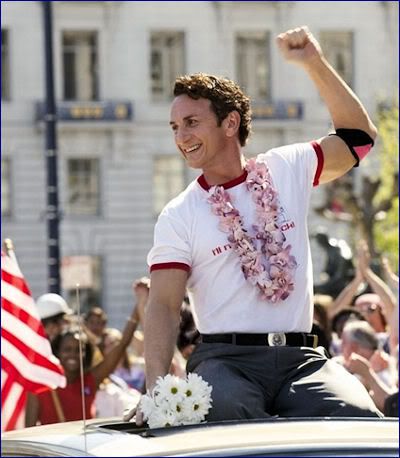
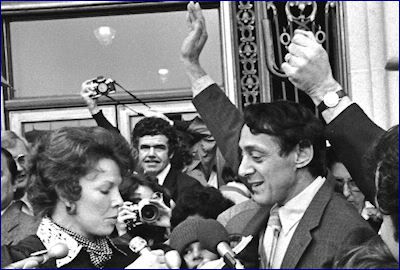
After five years spent working on the more experimental fringe, Gus Van Sant fluently returns to the relative mainstream with “Milk,” an adroitly and tenderly observed account of the life of Harvey Milk, the first openly gay man voted into significant U.S. public office. Smartly handled study of the San Francisco politician’s powerful effect on individuals and society accurately catches a moment in American political life three decades ago, but is most notable for the surprising and entirely winning performance by Sean Penn in the leading role. Almost the definition of a specialized audience film, this Focus release looks to perform strongly in urban and university-adjacent areas but will have trouble crossing over to a public not into gay, political and social-vanguard issues. Commentators will not fail to note certain parallels with the current political season, encapsulated by its hero’s parting line, “You gotta give ‘em hope.”

Van Sant has always gravitated toward transgressive outcast characters, and none of them traveled so far from the margins into the status quo, or had such convulsive impact, as the real-life Harvey Milk, a New Yorker who, at 40, moved to San Francisco and broke down a significant sociopolitical barrier before being assassinated by a disturbed fellow politician. The normalizing demands of the biopic genre necessarily squeeze the director into a more recognizable format than he has employed since at least “Finding Forrester” eight years ago, and it’s possible that the most ardent fans of his variously beautiful and aggravating subsequent works -- “Gerry,” “Elephant,” “Last Days” and “Paranoid Park” -- will find this one too conventional.

But while “Milk” is unquestionably marked by many mandatory scenes -- the electioneering, outrage at conservative opposition, tension between domestic and public life, insider politicking, public demonstrations, et al. -- the quality of the writing, acting and directing generally invests them with the feel of real life and credible personal interchange, rather than of scripted stops along the way from aspiration to triumph to tragedy. And on a project whose greatest danger lay in its potential to come across as agenda-driven agitprop, the filmmakers have crucially infused the story with qualities in very short supply today -- gentleness and a humane embrace of all its characters, even of the entirely vilifiable gunman, Dan White.

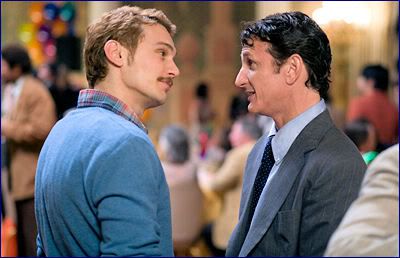
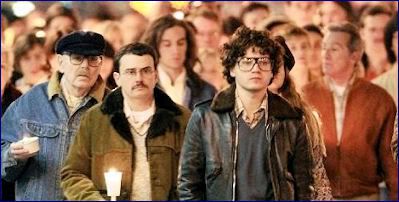
Enormously researched script by Dustin Lance Black (“Big Love,” the indie feature “Pedro”) begins in November 1978, with Milk presciently tape-recording some personal reflections, driven by the awareness that he could easily become the victim of a political assassination, which he in fact was later that month. “Almost everything I did was with an eye on the gay movement,” he admits, and so it is when, in jumping back to 1972, Harvey moves with b.f. Scott Smith (a frizzy-haired, sweet-smiling James Franco) from Gotham to Baghdad by the Bay, determined to do something meaningful with his hitherto uneventful life. The opening stretch fleetly documents the role Harvey and a small group of gay buds, who hung out at Harvey’s Castro Camera shop, played in transforming the Castro district from an unremarkable working-class neighborhood into the gay Mecca it shortly became.

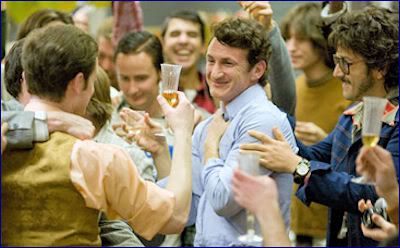
The banter flies easily among these bright young men, who form the nucleus of Harvey’s activist political organization when he runs for office and loses three times, twice for the San Francisco Board of Supervisors and once for California State Assembly. Warm but boldly assertive at all times, Harvey builds a strong support system in the Castro, becomes allied with new S.F. Mayor George Moscone (Victor Garber) and, against the backdrop of propagandist singer Anita Bryant’s campaigns to repeal gay rights in Florida and elsewhere, takes advantage of new city redistricting to finally win a seat on the Board of Supervisors in 1977.

At this point and beyond, especially during the fight against the attempt by California State Senator John Briggs (Denis O’Hare) to ban gays from teaching in public schools, the film does become overweighted by real and re-created TV reports and docu-like material (actual homemovies and vintage reportage are fluidly mixed with newly shot footage throughout) and rooted in specific issues at the expense of the personal.

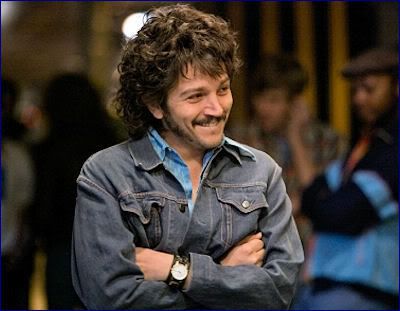
In fact, the pic’s least satisfactory interludes are devoted to Harvey’s last important lover, Jack Lira (Diego Luna), a footloose young Mexican who never comfortably coexists with the long-established inner circle. One can surmise there was a strong sexual bond that kept them together, but as Jack increasingly complains about his partner’s busy schedule, he quickly becomes an annoying character, the only person who creates a drag on Harvey’s energy and focus. More insight into this needy, immature fellow would have helped.

By contrast, another street kid picked up by Harvey, the amusingly brash Cleve Jones (Emile Hirsch), proves a constantly vibrant presence as he evolves into a crucial ally and movement leader. The lone woman of consequence, “tough dyke” Anne Kronenberg (Alison Pill), comes aboard to run the successful fourth campaign, while resistance to Harvey’s upfront style is unexpectedly provided by the Advocate publisher David Goodstein (Zvi Howard Rosenman).

But the most surprising, and suggestively inflected, exchanges occur between Harvey and his eventual killer. The city supervisor from a traditional working class district, clean-cut jock Dan White (Josh Brolin) seems distinctly uncomfortable around Harvey; his knee-jerk impulse is to coldly rebuff him, and he believes his Catholicism, and the disposition of his constituents, requires him to counteract Harvey’s gay agenda.

But he is at other times remarkably solicitous, inviting only Harvey, among all the other supervisors, to his son’s christening, and indulging in political horsetrading with his erstwhile opponent (“I think he may be one of us,” Harvey winks to one of his cronies). The pic reveals Harvey’s own unwittingly fateful betrayals of Dan.

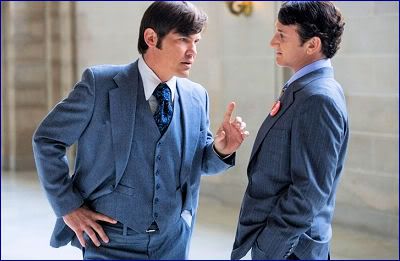
But arguably the film’s best scene is between Harvey and Dan in an otherwise empty foyer; an inarticulate plea for understanding in the form of a drunken rant by Dan, the exchange oozes a complicit vibe between the two men, all but confirming Harvey’s earlier suspicions. Brolin’s work is superlatively expressive of the inchoate impulses roiling inside his sorry character.

But good as most of the cast is, the show belongs squarely to Penn. Made to more closely resemble Milk via an elongated nose, which also makes his face look narrower, the actor socks over his characterization of a man he’s made to seem, above all, a really sweet guy, but who crucially possessed the fearlessness and toughness to be a highly successful political motivator, agitator and, ultimately, figurehead of a movement. Penn’s Harvey is a man with a ready laugh, alive to the moment, open to life regardless of neuroses and past tragedies, and acutely aware of one’s limited time on Earth. The explosive anger and fury often summoned by Penn in his work is nowhere to be seen, replaced by a geniality that is as welcome as it is unexpected.

Penn is also an ideal conduit for a characteristic shrewdly underlined in Black’s writing, that being Harvey’s talent for gently but firmly nudging people out of routine or complacent attitudes. Harvey knows how to tweak others with lightly provocative or stimulating comments that break the ice, and Penn lays on just the right amount of casual innuendo to make this crucial personality trait convincing.

Re-dressed to assume its more humdrum look of 30-plus years ago, the Castro represents itself with absolute authenticity; even Castro Camera has been re-created in the precise storefront location it occupied at the time. If anything, Van Sant and his team, including cinematographer Harris Savides, who so strikingly helped David Fincher evoke the same city and general era in “Zodiac,” have downplayed ostentatious period manifestations in costuming, production design and music in a bid to make a naturalistic film with a lived-in look.


Visit my New Site:: http://orvel.me