Showing posts with label Transexual. Show all posts

25 March 2009

Last Exit to Brooklyn (1989)

Last Exit to Brooklyn (1989)


Director: Uli Edel
Scenario: Hubert Selby Jr., Desmond Nakano
Genre: Drama
Country: USA, UK, West Germany
Year: 1989
Duration: 102 min
Rating: 6.7/10


Actors: Stephen Lang, Jennifer Jason Leigh, Burt Young, Peter Dobson, Jerry Orbach, Stephen Baldwin, Jason Andrews, James Lorinz, Sam Rockwell, Maia Danziger, Camille Saviola, Ricki Lake, Cameron Johann, John Costelloe, Christopher Murney


Nekako smo se manje više svi udaljili od svakodnevnih tema kao što su besparica, ostanak bez posla, neplaćeni računi, krediti...
Barem ja, iako su to stvari koje su svakodnevnica u mom okruženju. Obično kada se vratim sa posla, sjednem u fotelju, gledam tv ili slušam muziku ili odem kod nekog na kafu. Tako ispadne ko da me se ne tiču te socrealističke teme, štrajkovi, izbori, zatvaranje firmi i slično. Pa kad sam se već preselio na neku drugu planetu sinoć pustim ovaj film i dočeka me šok. Sve je kao da se nisam ni maknuo sa balkana, štrajkovi, jad, tuga, bijeda. Nastavljam da gledam film. Nekako se uživim sa tim ljudima iz filma i preselim u Brooklin 50-tih godina. Od muke kradu, prostituišu se, napijaju se i pričaju priče u lokalnoj kafani. Jedan od njih nemože ni seks sa ženom više da ima. Pa i kako će kada ga po cjeli dan biju muke. I onda on naleti na jednog tranvestita koji mu pokaže da sve to može i drugačije. Zaljubio se jadničak ne shvatajući da ga ovaj peder voli samo dok ima para, a kada ostane bez njih ode na ulicu.
Interesantna mi je i ova plava droljica Tralala. Popušiće svakom vojniku za par dolara, ko ja da popijem kafu. Prevariće, ukrašće, ma sve samo da se dokopa novca. I onda upozna vojnika koji treba da ode u Koreju. Jadničak joj priča o ljubavi o stvarima koje se ne dotiču novca i želji da ako preživi rat ostatak života provede sa njom. Na kraju joj pri odlasku ostavi kovertu i kaže otvori je kada brod isplovi. Tralala histerično otvori kovertu kad u njoj nema ništa, samo pismo koje je na brzinu pročitala. A gdje je tu novac.??
Šta da vam pišem , mnogima su ove priče poznate. Da li trebamo dopustiti da nam nemaština ili potreba za novcem uzme i dušu? Na žalost iako ne živimo u Brooklinu 50-tih godina, neke stvari se nisu promjenile. Ništa lakše nego naći nekog pedera da vam popuši u zamjenu za malo provoda , pokoju večeru ili neku "pozajmicu". Nemojte i vi dopustiti da budete oni koje traže za tako nešto. U kakav god to celofan umotali, uvijek će to biti neki vid prostitucije!

Description:
Last Exit to Brooklyn is a bleak tour of urban hell, a $16 million Stateside-lensed production of Hubert Selby Jr's controversial 1964 novel. But it doesn't hold a scalpel to the lacerating torrential prose that made the book so cringingly urgent.

Director Uli Edel, whose international reputation was made on the 1980 teen drug drama Christiane F., proves himself an accomplished professional. What he lacks is that fundamental gift of empathy that would make these damned souls more than just figures under a cinematic microscope.

Action is set in a working-class section of Brooklyn in 1952, close by the navy yards where young Americans are embarking for the Korean War. Many residents are engaged in a bitter six month strike against a local factory. Film's spectacular centerpiece is a well-staged riot pitting strikers against police when factory management uses scab labour to break the picket lines.

One of the protagonists is Stephen Lang, a venal married shop steward and secretary of the strike office who has been dipping into the union till to subsidize his first homosexual affair. When union boss Jerry Orbach boots him out, Lang is dropped by his mercenary lover. A subhuman band of local goons thrashes Lang to within an inch of his life (and 'crucifies' him on a wooden crossbeam).

Other major character is a tawdry, hard-drinking teen hooker named Tralala (Jennifer Jason Leigh), who lures unsuspecting bar-hopping servicemen to a back lot where they are mugged and robbed by the band. One night she gets drunk and defiantly declares herself open for sexual services to the neighbourhood bar's entire clintele.

The resulting gangbang, one of the most horrific passages in Selby Jr's book, is here sanitized and given a hopeful finish.


16 February 2009

Soldier's Girl (2003)


Soldier's Girl (2003)


Year: 2003
Genre: Drama
Director: Frank Pierson
Duration: 112 min
Country USA, Canada


Actors: Troy Garity, Lee Pace, Andre Braugher, Shawn Hatosy, Philip Eddolls, Merwin Mondesir, Dan Petronijevic, Mike Realba, Jeanie Calleja, Barclay Hope, Tulsi Balram, Vince Corazza, Kathryn Zenna, Kent Staines, Sofonda


Stradao ni kriv ni dužan! Koliko ste puta čuli ove riječi?!
Šta je to što ljude tjera da pakoste drugima? Skoro svaki dan vidim osmjeh kod ljudi kada se nekome desi nešto naopako. Jeza me prođe kada čujem riječi:"E baš mi je drago što sam ga zajebao!" Vrlo su česte u Srbiji! Zar to ne bi trebalo da je sramota reći, a kamoli učiniti!?
Nikada to nisam razumio, kao što ne želim razumijeti ni mržnju, zavist, oholost itd
Jedna od stvari na koje sam izuzetno ponosan je što sam uspio da izbjegnem sve te naopake ljudske emocije!

Kada je to u pitanje branite svoju ljudskost svim sredstvima, ma šta vam govorili! Ako se prepustite tim nagovaranjma izgubiće te dijelić sebe samog! Prepoznajte ta ubjeđivanja i odbacite ih! Ne prihvatajte imperative tipa: mrzim pedere, mrzim cigane, crnce, srbe, hrvate, arape , nemce ili bilo koga! prepoznajte to i odbacite!
Ako vas to obuzme vratiće vam se ko bumerang! Tako je to u životu!

Ova priča ekranizovana po istnitom događaju nam priča o vojniku Barry Winchellu (Troy Garity) koji je želio da bude uzoran, poštovam , voljen, da voli i da bude srećan! U jednom baru se zaljubio u tranvestita Calperniu Addams ( Lee Pace ), jako stastveno i iskreno!

Pogledajte bar VISION u kojem je upoznao i obratite pažnju kakoje zaljubljeno gleda u zadnjem Calpernijem performansu.


Zezati se sa trandžama je dozvoljeno, zabavne su, al zaljubiti se to je već strašno.
Kako se na to gledalo u sredini u kojoj je radio vidite u ovom tužnom filmu.


Po meni film je odličan za prikazivanje u manje tolerantnim sredinama. Možda nekog natjera na razmišljanje o tome možemo li birati koga će mo zavoljeti? Zašto to osuđivati i šta ako je riječ o našem djetetu!? Treba li ga se odreći?


VARIETY.COM
By DAVID ROONEY

For at least half the running time of "Soldier's Girl," director Frank Pierson and screenwriter Ron Nyswaner's account of the killing at a Kentucky military base in 1999 of a G.I. emotionally involved with a transgendered nightclub performer is as pedestrian as telemovies come. But pic recovers in later reels, boosted by superior performances and a powerful final act. Sketching the relationship with persuasive integrity, the drama quietly builds a sense of indignation over policy regarding gays in the military and the inadequacy of mental health screening for soldiers trained to feed their aggression. Exposure at gay festivals seems certain in addition to a strong reception on cable.

The true story of unsophisticated, learning-disabled G.I. Barry Winchell (Troy Garity) and Calpernia Addams (Lee Pace), a Nashville drag entertainer en route to sexual reassignment, inevitably will draw comparisons with films like "Boys Don't Cry" and "The Crying Game." The fundamental difference here is that the ostensibly straight soldier is aware almost from the beginning that his lover started life as a man and still has some of the parts.


Pierson and Nyswaner ("Philadelphia") devote an inordinate amount of time to by-the-numbers scenes of grueling military training and to less-than-sensational drag numbers before focusing more intimately on the central relationship.


Dragged along for a laugh to a gay bar by a bunch of his airborne infantry buddies, Barry meets Calpernia and is immediately drawn to the exotic creature for her beauty and warmth. She in turn responds to his gentlemanly manner, marveling that a handsome straight boy would want to see her again. Despite confessing to being white trash underneath the makeup, Calpernia is an intelligent, sensitive woman, who prior to starting sex reassignment was a Navy combat medic during the Gulf War, with a higher rank than Barry.


As their tentative courtship overcomes some initial nervousness and progresses to sex and love, the relationship between Barry and his unbalanced, pill-popping roommate Fisher (Shawn Hatosy) also undergoes changes. Issues regarding Fisher's sexual identity and psychiatric problems and the exact nature of his closeness to Barry drive increasingly manipulative behavior designed to damage his friend.


17 September 2008

Paris Is Burning (1990)


Paris Is Burning (1990)

Kada su u pitanju Transeksualci, Tranvestiti i Trans populacija ostajem nemoćan da bilo šta tu objasnim. Jedva da poznajem razliku između tih termina. Naprosto potpuno strani svijet za mene. O tome sam najviše naučio gledajući filmove Pedra Almodovara.
Ovaj dokumentarni film sam kao i mnoge druge ovdije našao surfajući na netu.
Isprva sam se smijao kao lud, a poslije mi se mješao osjećaj gađenja i čuđenja. Kako je film odmicao sa zanimanjem sam pratio priče tranvestita iz različitih društvenih slojeva.
Biti drag queen je za većinu ljudi prikazanih u ovom filmu smisao života. Ali za neke je to samo način ispoljavanja svoje seksualne individualnosti.
Film nam opisuje transgender scenu New Yorka 1990. godine koji nastupaju na "balls compettition" za šta ne umijem da nađem adekvatan prevod. Naprosto nekako izraz imati muda mi neide uz ova stvorenja na filmu. Ono što definitivno stoji da bi na našim prostrima bukavalno trebalo imati muda i prikazati se u takvim queen izdanjima kakvih možete vidjeti u ovom dokumentarcu.


English: (from wikipedia)
Paris Is Burning is a 1990 documentary film directed by Jennie Livingston. Filmed in the mid-to-late 1980s, it chronicles the ball culture of New York City and the poor, African American and Latino gay and transgendered community involved in it. Many consider Paris Is Burning to be an invaluable documentary of the end of the "Golden Age" of New York City drag balls, as well as a thoughtful exploration of race, class, and gender in America.

The film explores the elaborately-structured Ball competitions in which contestants, adhering to a very specific category or theme, must "walk" (much like a fashion model's runway) and subsequently be judged on criteria including the "realness" of their drag, the beauty of their clothing and their dancing ability.

Most of the film alternates between footage of balls and interviews with prominent members of the scene, including Pepper LaBeija, Dorian Corey, Anji Xtravaganza, and Willi Ninja. Many of the contestants vying for trophies are representatives of "Houses" (in the fashion sense, such as "House of Chanel") that serve as intentional families, social groups, and performance teams. Houses and ball contestants who consistently won in their walks eventually earned a "legendary" status.

Jennie Livingston, who never went to film school and who spent 7 years making Paris Is Burning, concentrated on interviews with key figures in the ball world, many of whom contribute monologues that shed light on the ball culture as well as on their own personalities. In the film, titles such as "house," "mother," and "reading" emphasize how the subculture the film depicts has taken words from the straight and white worlds, and imbued them with alternate meanings, just as the "houses" serve as surrogate families for young ball-walkers whose sexual orientations have sometimes made acceptance and love within their own families hard to come by.

In explaining the rules of the Balls (and the slang and terminology that goes along with them) the film also shines light on the societal hardships of Ball community members (such as racism, homophobia and poverty) and how these obstacles influence the participants (some are sex workers, some shoplift clothing to wear in the Balls, some were thrown out of their homes by homophobic parents, some are saving money for sex reassignment surgery). It follows several participants through candid one-on-one interviews (both in and out of the Balls) to give insight into their lives and struggles, and ultimately the strength, pride, and humor they maintain to survive in a "rich, white world."

Drag is presented as a complex performance of gender, class and race, in which one can express one's identity, desires and aspirations along many dimensions (see Drag). The African American and Latino community depicted in the film includes a diverse range of identities and gender presentations, from gay men to butch queens to transsexual women.

The film also documents the origins of "voguing", a dance style in which competing ball-walkers freeze and "pose" in glamorous positions (as if being photographed for the cover of Vogue). Pop star Madonna would, one year before Paris Is Burning was completed, bring the phenomenon to the mainstream with her number one song "Vogue".

Awards

* 1990 IDA Award, International Documentary Association
* 1990 LAFCA Award Best Documentary, Los Angeles Film Critics Association
* 1990 Audience Award Best Documentary, San Francisco International Lesbian & Gay Film Festival
* 1991 Grand Jury Prize Documentary, Sundance Film Festival
* 1991 Teddy Award for Best Documentary Film, Berlin International Film Festival
* 1991 Boston Society of Film Critics Awards (BSFC) Best Documentary
* 1991 the very first Open Palm Award, now called Breakthrough Director Award Gotham Awards
* 1991 NYFCC Award Best Documentary, New York Film Critics Circle Awards
* 1991 Golden Space Needle Award Best Documentary, Seattle International Film Festival
* 1992 Outstanding Film (Documentary), GLAAD Media Awards
* 1992 NSFC Award Best Documentary, National Society of Film Critics


Director: Jennie Livingston
Release Date: August 1991 (USA)
Genre: Documentary

Plot Summary: This is a documentary of 'drag nights' among New York's underclass. Queens are interviewed and observed preparing for and competing in many 'balls'...

Plot Keywords: Transvestism / Cross Dressing / Homosexual / Gay African American / Gay Interest
Awards: 12 wins & 1 nomination

Cast
(Complete credited cast)
Carmen and Brooke
André Christian
Dorian Corey
Paris Duprée
David The Father Xtravaganza
Junior Labeija
Pepper LaBeija
Sandy Ninja
Willi Ninja
Avis Pendavis
Freddie Pendavis
Kim Pendavis
Sol Pendavis
Stevie Saint Laurent
Octavia St. Laurent
Anji Xtravaganza (as Angie Xtravaganza)
Bianca Xtravaganza
Danny Xtravaganza
David Xtravaganza
David Ian Xtravaganza
Venus Xtravaganza

Also Known As:
The Children Are (USA) (working title)
To Be Real (USA) (working title)
Runtime: 71 min
Country: USA
Language: English


Download:

07 September 2008

Mauvais Genres FR aka TRANSFIXED (2001)


Mauvais Genres FR aka TRANSFIXED (2001)


Moram priznati da u zadnje vrijeme nisam baš bio raspoložen za gledanje filmova, a osim toga nekako i nisam nalazio ništa zanimljijvo, a da bi bilo prigodno za ovaj blog.
Jutros sam skinuo jedan francuski film i odlučio da ga poledam. Nedelja je i nisam ništa isplanirao za danas pa imam vremena.

TRANSFIXED je jedan klasičan policijski triler produciran u Francuskoj koji će prikovato za ekran sve ljubitelje takvih filmova.
Režiser Francis Girod nas vodi kroz film odavajući detalje priče u mjeri dovoljnoj da iz minute u minut očekujem rasplet i tako da kraja filma. Zato bi bilo bez veze da vam ispričam sve do kraja jer bi vam gledanje ovog filma izgubilo na draži .
Bo je Briselski transexualac, koji je napustio kuću nakon što ga(je)zlostavljao otac. Zbunjuju me transeksualci jer neznam jesu kojeg su pola i kako ih treba oslovljavati.
Bo je u jednoj čudnoj vezi sa mladim i zgodnim susjedom koji je ponižava na javnim mjestima ali ipak poklanja izvjesnu pažnju u trnutcima kada su sami.
Policija sumlja da se susjed odgovoran za serijska ubistva prostitutki po gradu......


Director: Francis Girod
Writers: Francis Girod (scenario and dialogue) &
Philippe Cougrand (scenario and dialogue) ...

Release Date: 8 August 2001 (France)
Genre: Drama

Plot Keywords: Abusive Relationship | Gay Interest | Prostitute | Transexual | Based On Novel
Awards: 1 win & 1 nomination


Cast
(Cast overview, first billed only)
Richard Bohringer ... Huysmans
Robinson Stévenin ... Bo
Stéphane Metzger ... Johnny
William Nadylam ... Maeva
Frédéric Pellegeay ... Alex
Ginette Garcin ... Louisette Vincent
Stéphane De Groodt ... Pryzuski (as Stéphane de Groot)
Charlie Dupont ... Courtois
Veronica Novak ... Elvire
Micheline Presle ... Violette Ancelin
Marcel Dossogne ... Professeur Ancelin
Thibaut Corrion ... Marlčne
Jean-Michel Leray
Catherine Claeys
Julien Arame


Also Known As:
Transfixed (Canada: English title) (festival title) (USA)
Bad Genres (International: English title) (festival title)
Gender Bias (USA)
Transfixions (France) (working title)

Runtime: 105 min
Country: France | Belgium
Language: French
Aspect Ratio: 2.35 : 1
Certification: France:-12


Living in a Sexual Playground, Haunted by His Childhood
By DAVE KEHR

Published: July 30, 2004


Somewhere at the center of the tangle of plot threads that is "Transfixed," a French thriller that opens today in New York, stands the reedy figure of Bo, a Brussels transvestite prostitute played with stunning cheekbones and a sultry stare by Robinson Stévenin. Bo has a full plate: as the film begins his father, a famous physician, has been arrested for fondling a child in his clinic, and Bo has been summoned by the authorities to testify against him. Bo's childhood abuse by his father instilled his gender confusion (a quaint notion, but then this is Old Europe), and now the authorities, who didn't believe Bo when he reported his father's behavior as a boy, are eager for his help in putting the older man behind bars.

But Bo is reluctant to cooperate with people who spurned him for so long. And he has some other things to worry about, namely the epidemic of violent deaths among his transvestite and transsexual prostitute friends. Richard Bohringer, of the weary eyes and raspy voice, enters the scene as the magistrate in charge of the investigation, who quickly concludes that Bo is a prime suspect.

But even this development is not enough to distract Bo from the obsession that drives his grim existence: he is madly in love with Johnny (Stéphane Metzger), the handsome young thug who lives across the street, where he appears to make a living as a gigolo to wealthy American widows. Though Johnny regularly insults Bo and humiliates him in public, the abuse seems only to feed Bo's passion, and soon the verbal attacks turn physical, much to Bo's delight. Every time Johnny hits him, it feels to Bo like a kiss.

"Transfixed" (called "Mauvais Genres" when it was released in France in 2001), was directed by the veteran French filmmaker Francis Girod, once a specialist in glossy melodramas starring Catherine Deneuve (whom Bo impersonates in his lip-synching nightclub act) and Romy Schneider. More at home among the jewelry stores and fashion houses of the Place Vendôme, Mr. Girod is a fish out of water in the after-hours clubs and deserted industrial districts that constitute the sexual underworld of Brussels. His film feels more like what one would see from the top of a double-decker tourist bus than the work of someone who has immersed himself in a sexual subculture and its particular values. Mr. Stévenin, though, looks great in heels.


Download

26 June 2008

Le Clan, Three Dancing Slaves (2004)


Le Clan, Three Dancing Slaves

U zadnje vrijeme, bas i nemam vremana za pisanje bloga, a kako stvari stoje do septembra ga i neću imati mnogo. Al eto potrudicu se da ipak napišem ponešto o nekom filmu. Linkove za filmove koje nađem će te naći na sajtu. Updajtujem ga na dva servera tako da uvjek jedan radi. Naravno sve je na engleskom. Jednom ili dva puta sedmično ću ga osvežavati sa filmovima koje nađem po netu.
Ovaj film sam gledao prošle godine. pregledao sam ga na preskoke i nije mi se dopao nešto posebno. Danas sam ga pogledao ponovo i odlućio da ga ipak stavim na blog.
Film mi je nekako čudan, nema neku posebno dobru priču, a opet je vrlo dinamičan. Tako da ga je zanimljivo pogledati.
Radi se o tri brata ( Alžirci) koji nakon što ima je majka umrla sa ocem žive u nekom malo gradiću u Francuskoj. Jedan je delikvent, tek izašao iz zatvora, drugi se upetljao sa narko dilerima, a treći je naprosto simpatičan peder. Zanimljivo je da u cjelom filmu nema ni jedne ženske uloge, ako ne računamo scenu gde je prikazana njihova majka i to kao sjećanje jednog od njih.
Ono što ovaj film čini pravim pederskim je izraziti mačizam uz podosta scena golih muškaraca koji na sebi svojstven način vode rčuna kako o sopstvenom izgledu tako i o tjelu.
Tri brata sa svojim društvom izlaze i provode se po žurkama, jure labudove po jezeru, drkaju kurac gledajući porniće.
Uz sve to Marc upada u nevolje sa lokalnim narko dilerima, koji ga prebijaju i maltretiraju. Ovaj namladji se zaljubljuje u Marcovog prijatelja, te sa njim ostvaruje intimnu vezu. Naravno otišlo mu dupe na doboš u jednoj brvnari pored jezera.
Najstariji brat pokušava da se uozbilji i nadje posao u jednoj firmi za prozvodnju pršuta.

Da vam ne pričam cijelu priču, u filmu ima podosta zanimljiv scena. Npr kako Mark šiša dlake oko kurca, Jebanje jednog tranvestita, gubitak nevinosti, zajednička drkanja i slično.
Očit je uticaj Francis Ozona na čitav filmski pederski pravac u francuskoj!


Director: Gaël Morel
Writers: Christophe Honoré (writer)
Gaël Morel (writer)
Release Date: 16 June 2004 (France)
Genre: Drama

Plot Keywords: Penis | Gay Sex | Beach | Masturbation Scene | Fistfight

Cast
(Cast overview, first billed only)
Nicolas Cazalé ... Marc
Stéphane Rideau ... Christophe
Thomas Dumerchez ... Olivier
Salim Kechiouche ... Hicham
Bruno Lochet ... Le pčre
Vincent Martinez ... Le "professeur"
Jackie Berroyer ... Robert
Aure Atika ... Emilie
Nicolas Paz ... Montana
Mathias Olivier ... Ryan
Gary Mary ... Luc
Geordie Piseri-Diaz ... Jérémy
Clément Dettli ... Henry
Pierre Vallin ... Sly
Janine Ribollet ... La mčre de Sly


Also Known As: 3 Dancing Slaves (USA)
Clan des hommes, Le (France) (working title)
The Clan (International: English title)
Trois danses d'esclaves (France) (working title)

Runtime: 90 min
Country: France
Language: French


I know what boys like: Arty French beefcake reverie meditates on masculinity and nudity
by Dennis Lim

Like so many films that target a gay male audience, Three Dancing Slaves transpires in an abstract parallel universe where half the population has mysteriously disappeared and the other half works out a lot and often goes unclothed. The only female presence to speak of in French actor-turned-director Gael Morel's latest feature is the dead mother of the titular fraternal trio. Exactly one flesh-and-blood woman is allowed to interrupt the beefcake reverie (in a single measly scene at that), and when even the most macho of the brothers has sex, it's with a bewigged pre-op transsexual (whose biological status is of course full-frontally corroborated). Unfocused and vaguely arty, Three Dancing Slaves is a Bruce Weber shoot come to life, a tone poem on masculinity that doesn't concern its pretty little head with very much besides the photogenic ways in which men bond, bicker, brawl, and practice capoeira (the unfortunate English title derives from the martial art's slave culture origins; the movie was released in France as Le Clan).


Co-written by Morel and Christophe Honoré (who authored the similarly blank and pouty Girls Can't Swim and Ma Mére), Slaves devotes a third to each brother's dead-end provincial existence. Marc (Nicolas Cazalé), a loose-cannon skinhead, is caught up in a vicious cycle of clumsy drug deals and angry vendettas (between visits to the gym). He hangs out with a bunch of ostensibly straight guys who jerk off communally to porn (with the help of a vibrating cell phone) and is such a carnal fellow that when he steps into the shower with his beloved dog, the movie for a few alarming moments threatens to redefine heavy petting. Marc's near zoophilic attachment to the poor pooch naturally leads to its brutal demise, setting in motion a sputtering revenge subplot.

In part two, eldest brother Christophe (Stéphane Rideau, Morel's co-star in André Téchiné's Wild Reeds), newly released from jail and committed to straight-and-narrow rehabilitation, distances himself from Marc and takes an upstanding job at the local ham factory, where his rapid ascent infuriates Marc and somewhat placates their dour father. The youngest sibling, Olivier (Thomas Dumerchez), whose segment is the sweetest and shortest, grieves the loss of their Algerian-born mother and slowly settles into a sexual relationship with Marc's friend Hicham (Salim Kechiouche). Morel idealizes the erotic hunger of new lovers—sending the boys on a hang-gliding adventure and eavesdropping on their idyllic dirty-talk comedown.


Morel is obviously up on his gay art films: Fran Ozon's influence is palpable, not least in the matter-of-fact sexuality and evocative use of water; the meat factory pointedly echoes the abattoir in Fassbinder's In a Year of 13 Moons. Most of all, the director, who has appeared in several Téchiné films, strives to emulate his mentor's suggestive use of ellipses and poetic detail. But the unpredictable emotional turmoil that animates Téchiné's work is almost entirely missing. Morel spells out his blood-ties theme in an archly symbolic shot of the three brothers sleeping in the nude, limbs entwined, watched over by their helpless father. The actors make the most of their severely underwritten roles (though there's only so much you can do with pube-trimming and ass-shaving scenes). For those so inclined, this lulling, banal, and rather pleasant film cultivates a mood of zone-out voyeurism. In the absence of a larger purpose, Morel is content to ogle, perhaps rightly assuming that his viewers will be too.


Download:
Pictures, description, english subtitle, trailer, etc
Click HERE

20 March 2008

Madame Satã (2002)


Madame Satã (2002)

Jutros se osjećam mnogo bolje i jedva čekam da izadjem iz kuće i prošetam se pored mora! Baš sam se nagledao filmova ovih dana.
Nekako se unesem u te filmove i naprosto živim tuđe živote tih dva sata.
Ipak potrebno je da se čovijek vrati sopstvenom filmu i živi svoj život. Ipak je to najljepše!
Ovaj film nam govori o jednom liku koji je imao interesantan život. Joăo Francisco dos Santos,(1900 - 1970) je živio u Brazilu i u svom životnom filmu je igrao mnoge uloge. Bio je i otac i tranvestit i gay, i prostitutka, ljubavnik, lopov, ubica, zatvorenik (27 godina je proveo u zatvoru), umjetnik, heroj, itd
Film Madam Sata nam govori o njemu. 30-te godine prošlog vijeka za homoseksualce su bile teške i u mnogo razvijenijim sredinama od Brazila.
A za Joăo Francisca su bile i lijepe i teške ! Joăo nije bio čovijek koji se može uklopiti u neki tradicionalni način življenja. Nevjerovatno je kako je uspjevao da integriše obadvije strane svoje ličnosti. Sa jedne strane izrazito jak muškarac, otac jednog dijeteta, dominantan muškarac, a sa druge žena koja sanja o slavi, filmu, muzici, plesu...... Živjeći na samom rubu dna, u društvu autsajdera, prostitutki, tranvestita, lopova i ubica izgradio je svoj poseban osjećaj za pravdu, stavljajuću svoje snove iznad svih društvenih normi.
Sa druge strane vidijećete jedan drugačiji Rio 30-tih godina.

Pogledajte ovaj film i vidjećete koliko je Joăo Francisco dos Santos drugačiji od ostatka svijeta !

Awards:

Buenos Aires International Festival of Independent Cinema - 2003
Cartagena Film Festival - 2004
Chicago International Film Festival - 2004
Cinema Brazil Grand Prize - 2003
GLAAD Media Awards - 2004
Glitter Awards - 2004
Havana Film Festival - 2002
Huelva Latin American Film Festival - 2002
Toronto Inside Out Lesbian and Gay Film and Video Festival - 2003
Istanbul International Film Festival - 2003
Lima Latin American Film Festival - 2003
etc


Director: Karim Ainouz
Writers: Karim Ainouz (writer),Marcelo Gomes (writer)
Release Date: 8 November 2002 (Brazil)
Genre: Biography / Drama
Plot Outline: Loose portrait of Joăo Francisco dos Santos, also known as Madame Sată, a sometime chef, transvestite, lover, father, hero and convict from Rio de Janeiro. more
Plot Keywords: Gay Interest / Sex / 1930s / Anger / Anti Racism
Awards: 21 wins & 14 nominations more

Cast

Lázaro Ramos ... Joăo Francisco dos Santos / Madame Sată
Marcelia Cartaxo ... Laurita
Flavio Bauraqui ... Tabu
Fellipe Marques ... Renatinho
Renata Sorrah ... Vitória
Emiliano Queiroz ... Amador
Giovana Barbosa ... Firmina
Ricardo Blat ... José
Guilherme Piva ... Álvaro
Marcelo Valle ... Delegado
Floriano Peixoto ... Gregório
Gero Camilo ... Agapito
Gláucio Gomes ... Gordo no Danúbio (Fat man)
Oră Figueiredo ... Policial
Karine Teles

Runtime: 105 min / Argentina:105 min (Buenos Aires Festival Internacional de Cine Independiente) / France:97 min (Cannes Film Festival)
Country: Brazil / France
Language: Portuguese

Buenos Aires International Festival of Independent Cinema - 2003
Cartagena Film Festival - 2004
Chicago International Film Festival - 2004
Cinema Brazil Grand Prize - 2003
GLAAD Media Awards - 2004
Glitter Awards - 2004
Havana Film Festival - 2002
Huelva Latin American Film Festival - 2002
Toronto Inside Out Lesbian and Gay Film and Video Festival - 2003
Istanbul International Film Festival - 2003
Lima Latin American Film Festival - 2003
etc


"Madame Sata" is a movie that depicts a bygone era. This colorful film directed by Karim Ainouz concentrates on the life of a charismatic man who lived an interesting life. We are taken to the Rio of the 1930s to witness the night life that flourished in the bohemian Lapa neighborhood, with its many dives and night clubs where all kinds of people mixed together.

This is the story of Joao, a poor black man who is a homosexual living in a macho dominated society. The film opens as Joao is being processed because of a crime he committed. We watch his face in a close-up where an off camera voice is reading what he did, and then we are taken back to watch his life in flashbacks.

Joao, who is an assistant to a French third rate chanteuse, is seen backstage imitating the singer in his own way, which is much better than what that tired woman does on stage. Joao lives in a household that includes Laurita, a friendly prostitute, and Tabu, a gay man who loves dressing as a woman, even for house work.

This was the era where the movies glorify those larger than life women who inspired gays all over the world to imitate them. Joao feels the attraction and after losing Renatinho, he asks the friendly Amador, who owns a bar in the Lapa district to give him a chance to perform in the style of the great divas of the era. The result is an instant success because of the innate talent in Joao. Alas, tragedy strikes when a loud mouth drunk begins to insult Joao, who decides to take matters into his own hand with dire consequences. In real life, Joao was in and out of prisons all his life.

Lazaro Ramos does a fantastic job portraying this complex man who was ahead of his time. Mr. Ramos is the best excuse for watching this Brazilian film that shows that seedy side of a society condemned to live in poverty and need. Marcelia Cartaxo plays Laurita, a true friend, who stuck by Joao no matter how bad things got. Flavioi Bauraqui is another asset in the film appearing as Tabu, the other member of Joao's household. Fellipe Marques is perfect as Renatinho, the man who loved Joao.

"Madame Sata" offers a nostalgic look at the life in Rio during the 30s and it's based on the true story of the man who was made famous for his originality and contribution to a society that tried to keep him away from mixing with them. This is a great directing job by Karim Ainouz, who with the writer, Marcelo Gomes, takes the viewer to a magical ride to the exotic life of that long gone Brazil.


27 January 2008

I Love You Baby (2001)


I Love You Baby (2001)


Baš se nagledah ovih Španskih filmova. Pa oni snimaju filmove o pederima više no mi reklame za prašak.
Danas me zapao još jedan španski film, mislim da ću poslije ovog malo da odmorim od Španskog jezika jer ako ovako nastavim ovaj blog bi mogao promijeniti jezik.
I love you baby, je romantična komedija u trouglu prelijepog Markosa, Daniela i dominikanke Marisol.
Markos dolazi u Madrid da radi i živi kod svojih rodjaka. Upoznaje Danijela sa kojim započinje intezivno druženje koje prelazi u intimno.
Odlučuju da žive zajedno. Gay priča nebi bila priča da Marcos ne upoznaje Marisol u koju se zaljubljuje i shvata da nemože da živi sa Danijelom.
Napušta ga i započinje vezu sa Marisol. Danijel očajan pokušava da ga vrati i prerušava se u ženu i započinje prijateljstvo sa Marisol i Marcosom.

English:

Marcos comes to Madrid to live with his aunt and uncle and work in their restaurant. He dreams of opening a restaurant of his own one day and of finding love. Love he finds in Daniel, a struggling young actor. The two quickly fall into a torrid relationship and Marcos moves in with Daniel. Their love is symbolized by a poster of Boy George that Marcos gives to Daniel, to commemorate where they first kissed (outside a shop where the poster was hanging).

One night the couple is at a karaoke bar and, while they sing a duet, Marcos is injured by a falling disco ball. When he awakens the next day, he is no longer in love with Daniel and has even seemingly become straight. Although he tries for a short time to maintain a relationship with Daniel, eventually he moves back in with his family. He meets Marisol, a Dominican immigrant, and they fall in love.

Desperate to win Marcos back, Daniel hatches a crazy scheme. He'll dress as a woman and win Marcos away from Marisol. His plan, inevitably, backfires and Daniel is humiliated.

The film ends several years in the future. Marcos and Daniel run into each other at an airport and catch up. Marcos has opened his own restaurant and he and Marisol are married with several children. Daniel has become a movie star and has also gotten a happy romantic ending, pointing out his new love - Boy George (in a cameo appearance as himself).


Awards and nominations

* Torino International Gay & Lesbian Film Festival, Best Feature Film (nominated)


Directors: Alfonso Albacete, David Menkes
Writers: Alfonso Albacete,Lucía Etxebarría

Release Date: 26 October 2001 (Spain)
Genre: Comedy / Romance
Plot Outline: Boy Meets Boy. Boy gets hit in head. Boy loses boy to girl. What will he do?

Plot Keywords: Gay Interest / Amnesia
Awards: 1 nomination


Cast
(Credited cast)
Jorge Sanz ... Marcos
Tiaré Scanda ... Marisol
Santiago Magill ... Daniel
Verónica Forqué ... Carmen
Marilyn Torres ... Kenya
Alicia Agut ... Asunción
Nacho San Pedro ... Antonio
Laura Ramos ... Kati
Runtime: 110 min
Country: Spain
Language: Spanish


La Mala Educación, Bad Education (2004)

Bad Education (2004)
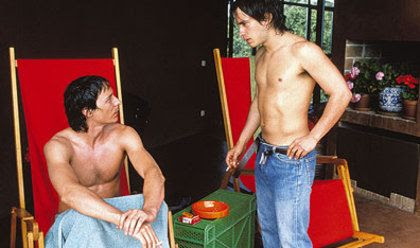
La mala educación (original title)


Director: Pedro Almodóvar
Writer: Pedro Almodóvar (writer) Genre: Drama 
Country: Spain 
Language: Spanish
Year: 2004 
Duration: 104 min

Stars: Gael García Bernal, Fele Martínez, Javier Cámara,Daniel Giménez Cacho,Lluís Homar, Francisco Maestre,Francisco Boira, Juan Fernández


Pedro Almodovar dugo je nosio ožiljke vlastite mladosti provedene pod užasima Frankove klero-tiranije.
Kako sam Alomodovar kaže, koncept i priču "Lošeg odgoja" ( "Lošeg Vaspitanja") sastavljao je gotovo desetak godina, ohrabrujući se za finalizaciju projekta. Rezultat je je ovaj film, koji je po mnogim kritičarima najkomlikovaniji i najdorađeniji ovog izuzetnog filmskog stvaraoca.
Gledaocima preporučujem da pažljivo odgledaju ovaj film , jer nije se lako snalaziti sa višestrukim identitetima glavnih junaka. Film sam morao odgledati dva puta, jer prvi put uz grickalice i kafu je bilo isuviše površno da bi se ušlo i bit svih dešavanja.

Film prati Enrikea, mladog filmskog režisera koji živi u Madridu. Enrikeu u posjetu dolazi osoba koja se predstavlja kao njegov školski drug Ignasio i nudi mu kratku priču inspirisanu njihovim dijetinjstvom i danima koje su proveli u školi. Enrike u mladom čovjeku ne prepoznaje Ignasija, diječaka sa kojim je pre mnogo godina otkrivao ljubav, filmsku umetnost, ali i strah, represiju i licemjerstvo.
Sve više sumnjajući u identitet mladića koji se predstavlja kao Ignasio, Enrike odlazi u Galiciju kod njegove majke, od koje saznaje da je Ignasio mrtav već četiri godine, a da je mladić koji je došao kod njega njegov mlađi brat, Huan koji je sebe naziva Angel ( umjetničko ime) i koji želi da u filmu glumi tranvestita Zaharu, glavnu ulogu po scenariju.

Zamijenjeni identiteti, izmješana prošlost i sadašnjost, film u filmu čine ovaj film najslojevitijim ikada napravljenim u Evropskoj produkciji.
Film o zlostavljanju unutar crkve, u kojem zlostavljeni sam postaje zlostavljač.
Bez obzira na kompleksnu strukturu filma, kino dvorane su po evropi bile pune, što je samo po sebi preporuka za ovaj film.
Bad Education (Spanish: La mala educación) is a 2004 film by Spanish director Pedro Almodóvar about two reunited childhood friends (and lovers) in the vein of an Alfred Hitchcock murder mystery. Sexual abuse by Catholic priests, transsexuality, drug abuse, and a metafiction are also important themes and devices in the plot. It is rated 18 in Spain, 15 in the UK by the BBFC and NC-17 in the US by the MPAA.
Two school boys, Ignacio and Enrique, discover love, cinema and fear in a religious school at the start of the 1960s. Father Manolo, the school principal and their literature teacher, is witness to and part of these discoveries. On discovering the two boy's affection for each other, the priest, who is himself engrossed with Ignacio, is jealous and theatens to expel Enrique as a `bad influence'. In an attempt to prevent this Ignacio promises to do whatever the priest asks of him. The priest double-crosses Ignacio and expels Enrique anyway.
The film jumps to the 1980s with the boys now young adults. Enrique (Fele Martínez), a successful film director, is visited by a stranger (Gael García Bernal) in his office, an actor looking for work who claims to be Enrique's boarding school friend and first love interest Ignacio. "Ignacio" has brought a short story with him that is about their time at the Catholic school together and the physical and sexual abuse they suffered at the hands of Father Manolo (Daniel Giménez Cacho). It also includes a fictionalized account of their (Enrique's and Ignacio's) reunion after all those years.
Enrique wants to adapt Ignacio's story into a film, but "Ignacio's" condition is that he play the part of Zahara, the transsexual lead. Enrique remains skeptical, for he feels that the Ignacio whom he loved and the Ignacio of today are totally different people. He drives to Galicia to Ignacio's mother and learns that the real Ignacio has been dead for four years and that the man who came to his office is really Ignacio's younger brother, Juan.
Enrique's interest is piqued and he decides to do the movie with Juan in the role of Ignacio to find out what drives Juan. Enrique and "Ignacio" start a relationship and Enrique revises the script so that it ends with Father Manolo, whom Ignacio was trying to blackmail over the abuse to get money for sex reassignment surgery, having Ignacio murdered. When the scene is shot, "Ignacio" breaks out in tears unexpectedly.
The movie set is visited by Manuel Berenguer (Lluís Homar), who has read in the newspaper about the film and is none other than the real Father Manolo who has resigned from Church duty. Manuel confesses to Enrique that the new ending of the film is not far from the truth: the real Ignacio blackmailed Manuel, who somehow managed to scratch together the money but also took an interest in Ignacio's younger brother Juan. Juan and Manuel started a relationship and after a while realized they both wanted to see Ignacio dead. This was facilitated by the fact that Ignacio was a heroin addict. Juan scored some very pure heroin, so that his brother would die by overdose after shooting up.

Enrique is understandably shocked and not at all interested in Juan's weak vindications for what he did to his brother. Finally, before he leaves, Juan gives Enrique a piece of paper: a letter to Enrique that Ignacio was in the middle of typing when he died.

[imdbltid]0275491[/imdbltid]


Visit my New Site:: http://orvel.me